

CBD soft chews are the easiest way to give a dog cannabidiol, because most dogs eat them like a treat. The best chew for your dog has a lab report you can read, a milligram count per chew that you can turn into a dose for your dog’s weight, and no THC beyond the legal limit. Your veterinarian should know about it before the first chew, especially if your dog takes other medication. We sell CBD and wellness products for pets, and this guide covers what you need to choose and use a chew well.
TL;DR
-
Work from milligrams of CBD per chew and your dog’s weight in kilograms. One European veterinary behavior group suggests starting at 2.5 mg/kg twice daily, while Cornell notes that no standard therapeutic dose has been established.
-
Look for an independent lab report (certificate of analysis, or COA) showing no more than 0.3% THC, plus contaminant testing.
-
The strongest veterinary evidence is for osteoarthritis pain and some epilepsy cases. There is no appreciable evidence yet for anxiety.
-
CBD can affect the liver enzymes that process many drugs, so talk to your vet before starting.
-
Keep human THC edibles away from your dog. Use only products made for pets.
Table of Contents
What CBD soft chews are, and how they differ from oils
A soft chew is a small, pliable treat with a set amount of hemp-derived CBD in each piece. Gummies are the same idea in a different texture. Oils and tinctures are liquids you drop into the mouth or onto food.
The practical difference is dosing. A chew gives you a fixed amount in a form dogs accept, which makes daily routines easy. An oil lets you adjust the amount drop by drop, which suits very small or very large dogs. Researchers are still comparing how the body absorbs each form. A Cornell study found soft chews and oils reached similar steady-state levels, according to a research summary. That is why the milligram count on the label and consistent timing matter more than the format.
Two more points about format:
-
Pet chews and human gummies are not interchangeable. Human gummies are made for human bodies and tastes. If a product is not made for dogs, do not give it to your dog.
-
THC is the compound to keep out. Merck Veterinary Manual notes that unexpected neurological signs in some CBD cases at a US poison helpline were likely linked to large ingestions or contamination with unlabeled THC. Look for pet products with less than 0.3% THC, as the European veterinary guidance advises.
What the veterinary research supports
Owners tend to hear big promises, so here is what the studies show.
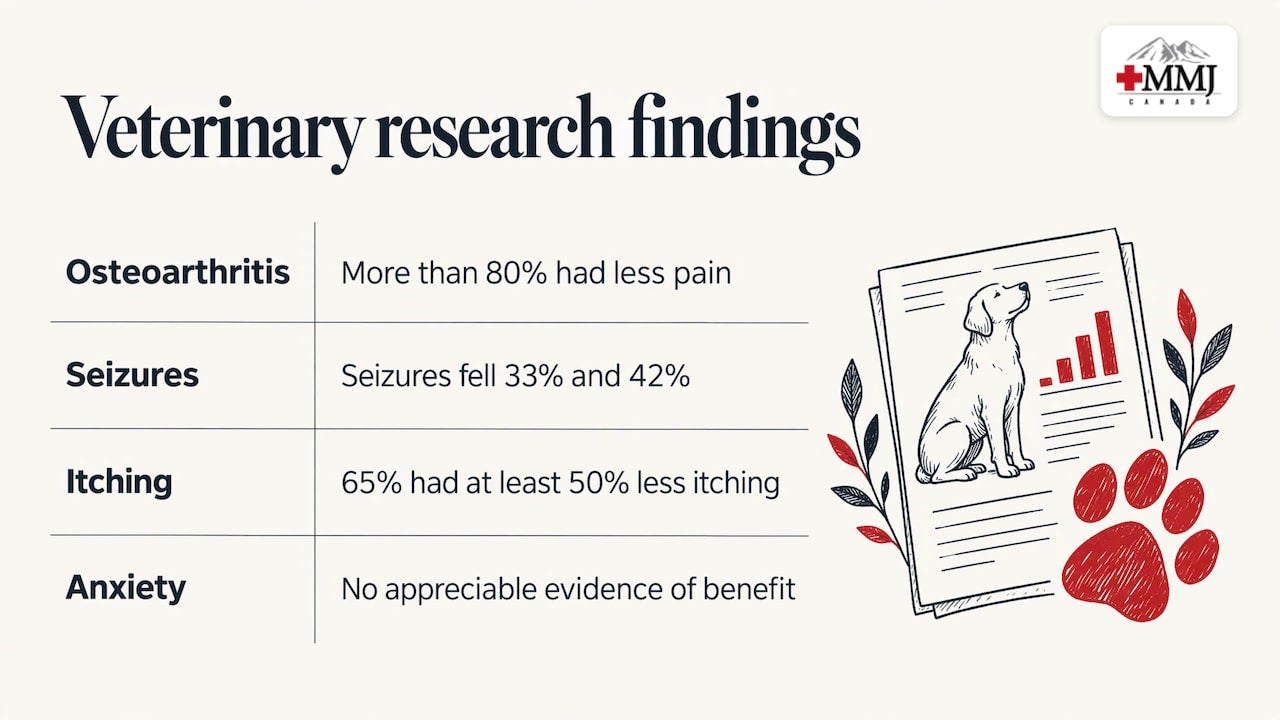
Joint pain. A 2023 review in Frontiers in Veterinary Science found that in most studies CBD significantly reduced pain and increased activity in dogs with osteoarthritis. Cornell’s Riney Canine Health Center reports that its early study showed more than 80% of dogs with osteoarthritis had less pain. That is why many owners of older dogs with stiff hips look at chews first.
Seizures. The same review describes two randomized controlled trials in dogs with refractory epilepsy. Seizures fell in 33% of treated dogs in one trial and 42% in the other. Epilepsy needs a veterinarian in charge of the plan, and chews are not a substitute for prescribed treatment.
Itchy skin. Cornell also reports that in a trial of dogs with atopy (allergic skin disease), 65% had at least a 50% decrease in itching and chewing over four weeks.
Anxiety. Many chews are sold as calming treats, so this matters. A 2023 JAVMA review states there is currently no appreciable evidence that CBD products treat situational or chronic anxiety in dogs. The European behavior group adds that CBD cannot replace a consultation with a veterinary behaviorist for an anxious or phobic dog. If your dog panics at storms or can’t be left alone, start with a behavior professional and treat chews as an add-on to that plan.
The research is still young. The Frontiers review notes that studies differ because of small samples, short durations and different product types, so results vary from study to study. Think of a chew as one part of care, not a cure.
How to choose a chew: the label and the lab report
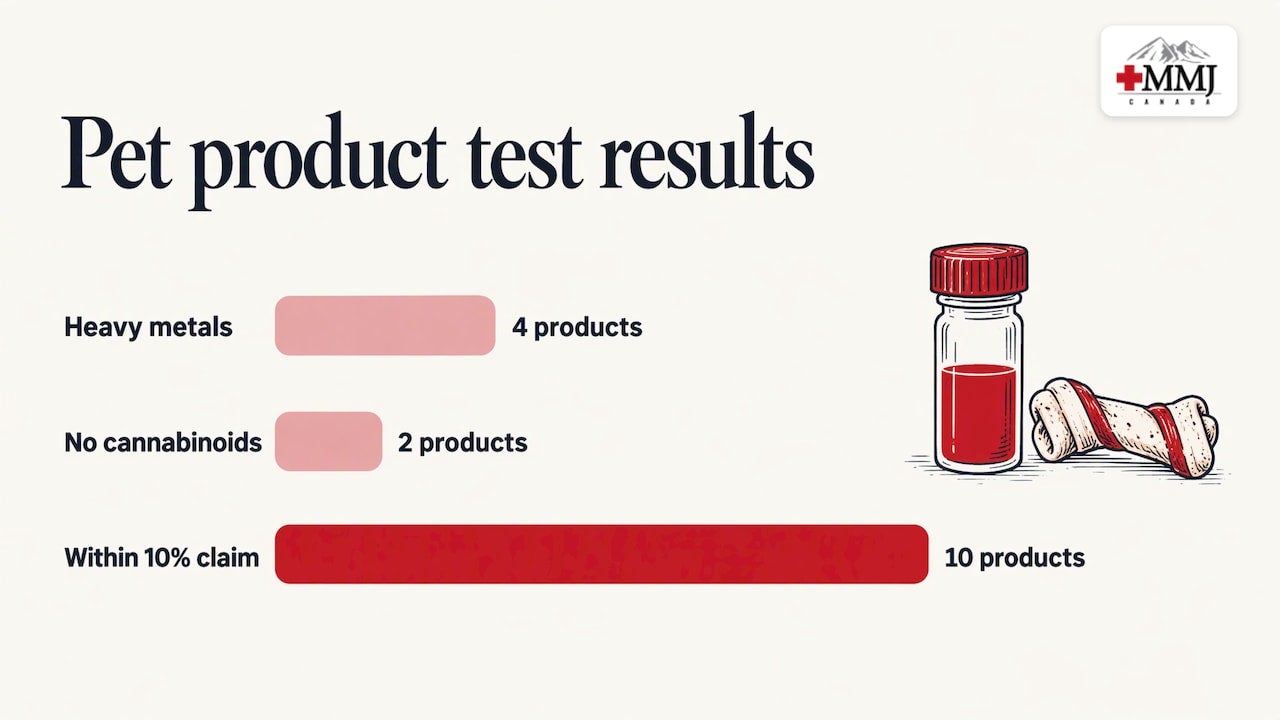
Product quality varies a lot, and it is the biggest factor you can control. Cornell reports that a study of 29 pet CBD products found heavy metal contamination in four, two with no cannabinoids at all, and only 10 of the rest within 10% of their label claim. A label alone doesn’t tell you that.
Here is a checklist you can run in five minutes:
-
A COA from an independent lab. A 2023 JAVMA guide says responsible hemp CBD companies provide a certificate of analysis from an independent third-party lab showing no more than 0.3% THC.
-
A full panel. A useful COA reports cannabinoid concentrations plus heavy metals, pesticides, solvents, mycotoxins (mold toxins) and microbes, according to the same guide.
-
The right lot. The COA should match the batch number on the package. The JAVMA guide recommends checking current and prior lots to confirm consistency.
-
Milligrams per chew. You need a clear number, not a vague “hemp extract” amount. Without it you can’t calculate a dose.
-
Ingredients. Look for a short, dog-appropriate list with no THC and no sweeteners made for humans.
Our products are lab-tested, and we sell within Canadian regulations. The same checklist helps you when comparing anything you buy for your dog.
How to work out a dose per chew
No official dose exists. Cornell states that no standard therapeutic dose for CBD in dogs has been established. The most specific published guidance for behavior cases is the 2024 European working-group statement. It suggests starting at 2.5 mg/kg twice daily, potentially rising to 10 mg/kg twice daily, and it favors CBD isolate over full- or broad-spectrum products.
The arithmetic:
-
Convert your dog’s weight to kilograms (pounds divided by 2.2).
-
Multiply by the starting dose.
-
Divide by the milligrams in one chew.
Worked example: a 44 lb dog weighs 20 kg. At 2.5 mg/kg, one dose is 50 mg of CBD. With a 10 mg chew, that is five chews per dose, which may be impractical. With a 25 mg chew, it is two. A small dog of 11 lb (5 kg) needs about 12.5 mg per dose, so a low-milligram chew that can be cut in half suits it better than a strong one.
Because this is a starting point and not a prescription, your vet should confirm the number for your dog’s size, age and health. Then:
-
Give the same dose at the same times each day so you can judge the effect.
-
Change one thing at a time.
-
Keep a short log of appetite, energy, sleep, stool and any change in the condition you’re treating.
The European group also suggests checking liver function one month after starting, then every six months. Your vet can arrange the blood test.
Side effects and overdose
Most reports are mild. A 2023 JAVMA review states that adverse events are not commonly reported, with occasional sleepiness and behavior changes. Cornell reports the most common owner-noted effects were increased appetite and sedation.
Merck Veterinary Manual adds some numbers on larger exposures. In a single high oral dose of up to 62 mg/kg, dogs developed only diarrhea. In calls to a US pet poison helpline, about 45% of CBD cases stayed clinically normal, 15% vomited, and some dogs showed lethargy or wobbliness (ataxia). The manual links those neurological signs to large volumes or to contamination with unlabeled THC, which is another reason to buy tested products.
Keep chews out of reach. A dog that gets into the jar can eat a large amount fast. If yours does, call your vet or an animal poison hotline right away, and tell them the product, the milligrams per chew and roughly how many were eaten.
Liver enzymes. Chronic CBD dosing in dogs has been linked to temporary rises in alkaline phosphatase (ALP), a liver enzyme. A 2025 review notes the significance is uncertain, since age, stress and drugs like corticosteroids also raise it. This is why a baseline blood test and a recheck make sense for dogs on long-term chews.
When to talk to your vet first
Talk to your veterinarian before the first chew if any of these apply:
-
Your dog takes any prescription medication. Cornell explains CBD can affect liver enzymes involved in metabolizing many drugs. The European group urges caution when CBD is combined with psychotropic drugs such as fluoxetine, opioids, tricyclic antidepressants or benzodiazepines.
-
Your dog has liver disease, seizures or chronic pain that needs a diagnosis.
-
Your dog is a puppy, pregnant or nursing, or elderly.
-
Your dog shows anxiety or aggression. A behaviorist should lead.
Bring the product label and COA to the appointment. A vet can then set a dose and a plan for checking progress.
Our pet CBD range
We are an online retailer in Canada that sells CBD and wellness products for pets, alongside CBD oils, gummies and topicals for people. Our products are lab-tested, and we sell in line with Canadian regulations. You can browse the full CBD product category to find pet products, and check the milligrams per chew against the dose you worked out with your vet.

For your own use, our shop also carries CBD gummies for people. Store those separately from anything meant for your dog.
FAQ
Can I give my dog CBD gummies for pain?
The best evidence is for osteoarthritis pain. A 2023 review found CBD reduced pain and increased activity in most studies, though one trial found no benefit for acute pain after knee surgery. Ask your vet to confirm the cause of your dog’s pain and to set a dose.
Are CBD dog chews and CBD dog gummies the same thing?
They are very close. Both are treats with a set amount of CBD per piece, with soft chews typically more pliable. What matters is the milligram count, the THC content and the COA, not the name on the package.
How many CBD chews should my dog get?
There is no official dose. One European veterinary group suggests starting at 2.5 mg/kg twice daily. Convert your dog’s weight to kilograms, multiply, and divide by the milligrams per chew. Confirm the result with your vet.
Will CBD chews calm an anxious dog?
A 2023 JAVMA review found no appreciable evidence that CBD treats situational or chronic anxiety in dogs. For anxiety, see your vet or a veterinary behaviorist.
Sources
-
CBD: What you need to know about its uses and efficacy (Cornell Riney Canine Health Center)
-
Key quality control aspects about cannabinoid-rich hemp (JAVMA, 2023)
-
Cannabidiol use guidelines in behavioral medicine in dogs (ESVCE, 2024)
-
Toxicosis in Dogs and Cats From Cannabidiol (Merck Veterinary Manual)
-
CBD for pets: navigating quality assurance, safety (PMC, 2025)