

The strongest evidence for weed and back pain comes from a 2025 phase 3 trial of a full-spectrum, THC-containing cannabis extract in chronic lower back pain. It reduced pain and improved sleep and daily function. For adults in Canada, the practical answer is to pick a lab-tested product whose THC and CBD content you can read on the label. Start with a low dose and choose a format that fits when and how your pain shows up. Our flower, edibles, vapes, CBD products and topicals are sold with lab testing and in line with Canadian regulations.
This guide is for adults who want to understand what the research says before they buy. It also covers nerve pain and chronic pain, because many people with back pain have both.
TL;DR
- A September 2025 trial of 820 adults found a full-spectrum cannabis extract cut chronic lower back pain more than placebo, with better sleep and less disability.
- A 2024 clinical practice guideline gives a strong recommendation for cannabis-based medicines in chronic pain, including nerve pain. It notes the best pain evidence is for THC formulations.
- Format matters: vaporized flower for flare-ups, edibles and tinctures for steadier coverage, topicals for a sore spot.
- Start low and raise the dose slowly. Most side effects are linked to THC and ease when the dose drops.
- Check with your doctor first if you take sedating or other centrally acting medicines, have heart disease, or have a history of psychosis.
Table of Contents
- What the best trial on cannabis and back pain found
- What long-term patient reports add
- THC, CBD or both? Choosing the cannabinoid
- Weed for nerve pain and sciatica-type pain
- Choosing a format for your kind of back pain
- How to start: a low-dose routine
- Side effects and who should check with a doctor first
- Where you can buy and what to look for
- FAQ
- Sources
What the best trial on cannabis and back pain found
Most people searching this topic want to know one thing: does it work on a bad back? The most rigorous answer so far is a phase 3 randomized, placebo-controlled trial published in Nature Medicine in September 2025. It enrolled 820 adults with chronic lower back pain and ran a 12-week double-blind phase. Participants took a full-spectrum cannabis extract called VER-01 or a placebo.
The numbers:
- Average pain on a 0 to 10 scale fell by 1.9 points with the extract and 1.4 with placebo, a difference of 0.6 points (P<0.001).
- 54.1% of the extract group reached at least a 30% pain reduction, against 39.5% on placebo.
- Sleep improved (a 0.7-point difference on a 0 to 10 scale), and so did disability, measured with the Roland-Morris questionnaire (a 1.1-point difference).
- The authors found no signs of dependence or withdrawal.
A 30% reduction is a common benchmark for a pain change that a patient notices. A 2026 systematic review of randomized trials, covering five trials and 1,072 participants, found moderate-certainty evidence for this full-spectrum extract in chronic lower back pain. It also noted that results depend on the formulation, the route and the cannabinoid mix. In plain terms, what you take matters as much as whether you take cannabis at all.
What long-term patient reports add
Trials last weeks. Back pain lasts years. Two large long-term studies of patients using medical cannabis help fill that gap.
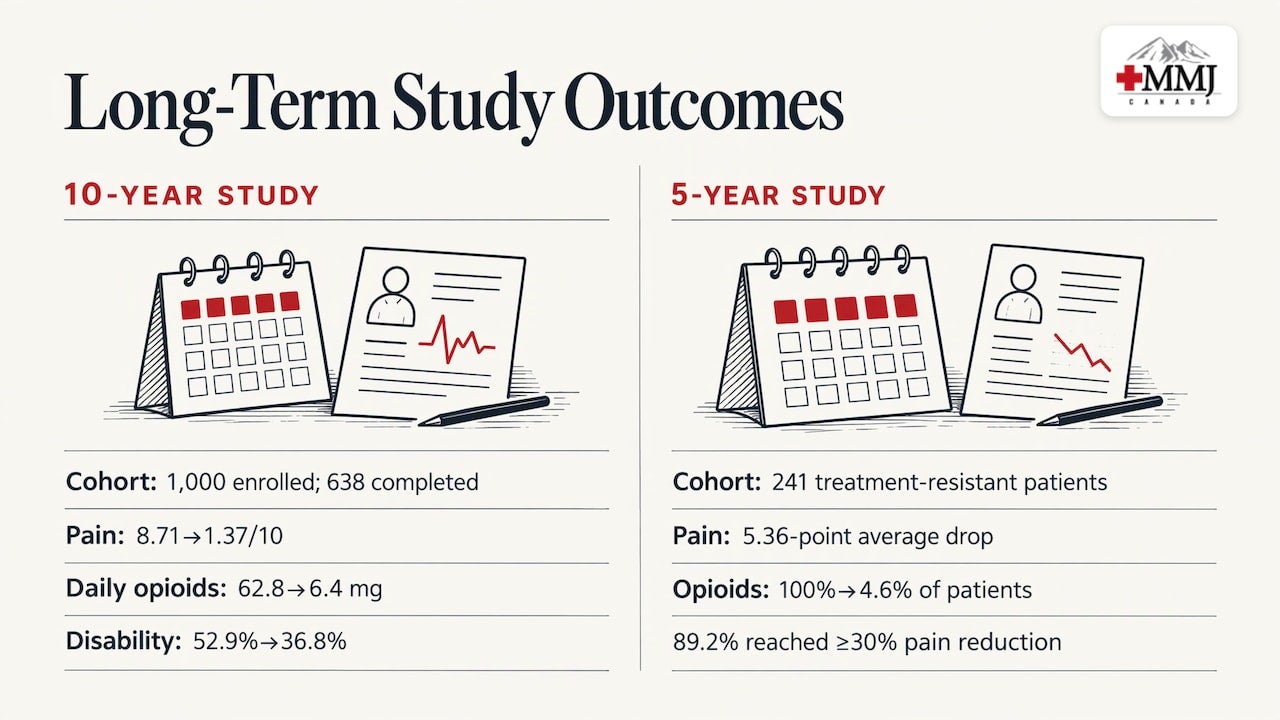
A 10-year study in the European Spine Journal, published in September 2026, followed 1,000 patients with chronic low back pain. Of the 638 who completed it, average pain scores fell from 8.71 to 1.37 on a 0 to 10 scale. Daily opioid use, measured in morphine equivalents, fell from 62.8 mg to 6.4 mg. Disability scores on the Oswestry index also improved, from 52.9% to 36.8%.
A five-year analysis from Hasharon Hospital in Israel, published in 2026, looked at 241 patients whose back pain had not responded to other treatment. They used inhaled cannabis with THC between 4% and 22% and CBD between 2% and 22%. Pain fell by 5.36 points on average, and 89.2% reached at least a 30% reduction at year five. Opioid use dropped from 100% of patients to 4.6%. Of the 1,338 adverse events recorded across 1,205 patient-years, 99.8% were mild, mainly affecting the eyes, thinking and digestion.
These are observational studies of patients under medical supervision, so they describe what people experienced, not a head-to-head test. Still, they show why many people with long-standing back pain look at cannabis as a way to reduce how much else they need.
For a wider look at the topic, see our guide to cannabis for chronic pain.
THC, CBD or both? Choosing the cannabinoid
THC is the compound that causes the high. CBD is non-intoxicating. Back pain products usually lean one way or blend the two, and the research gives a clear steer.
A 2024 clinical practice guideline reviewed 70 articles, including 19 systematic reviews and 51 original studies. It gives a strong recommendation, based on moderate-quality evidence, for cannabis and cannabinoid-based medicines in chronic pain. That covers use alone, as a replacement for other treatment, or as an add-on. It notes that the strongest evidence for pain reduction is for THC formulations rather than CBD alone. It also notes that most adverse events come from THC and generally fade within 48 hours or once the dose stops rising.
That points to three practical profiles:
| Profile | Best suited to | What to know |
|---|---|---|
| THC-dominant | Moderate to severe pain, pain that wakes you at night | Strongest pain evidence, most likely to cause dizziness or drowsiness at higher doses |
| Balanced THC and CBD | People who want pain relief with a gentler head effect | The guideline says a CBD-dominant product combined with THC can soften THC side effects |
| CBD-dominant | Daytime use, mild aches, people avoiding intoxication | Non-intoxicating, often paired with a small THC dose at bedtime |
The guideline describes one routine in particular. Start with CBD during the day and add THC at bedtime. Many people with back pain find this gives them a clear head at work and relief for sleep.
If you want to avoid THC entirely, our guide to THC-free medical marijuana explains the options. Our CBD sleep-aid tincture and CBD gummies fit that daytime and evening split.
Weed for nerve pain and sciatica-type pain
Many people who search for back pain relief also have pain that radiates down the leg or feels burning or electric. That is nerve (neuropathic) pain, and it is a common reason people turn to cannabis.
The same 2024 guideline includes central and peripheral neuropathic pain in its strong recommendation for cannabis-based medicines. The American Society of Pain and Neuroscience’s 2023 review reports that noncancer chronic pain affects about 30% of the US population. It states that moderate-quality evidence suggests medical cannabis is effective for chronic musculoskeletal pain. It also states that no overdose deaths from medical cannabis have been reported. The VER-01 trial also recorded improved neuropathic symptoms among people with chronic low back pain.
If your pain has a nerve component, the same approach applies: a measured THC dose, ideally balanced with CBD, in a format you can adjust. Our page on cannabis for multiple sclerosis covers another nerve-related condition.
Choosing a format for your kind of back pain
How fast it works and how long it lasts depend on the format. Match it to your pain pattern.
Flare-ups and breakthrough pain: vaporized flower
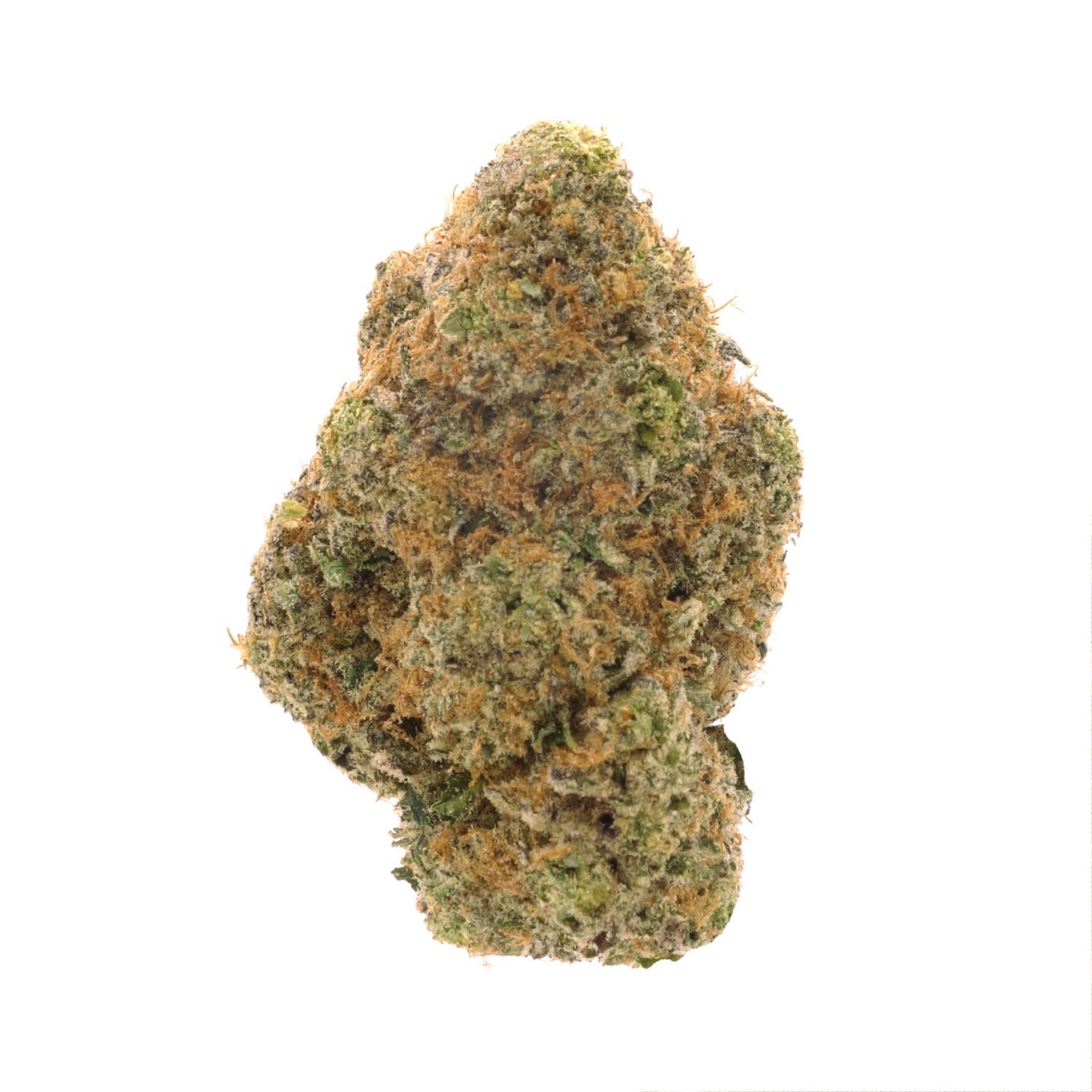
Inhaling acts within minutes. The guideline advises that inhalation be limited to vaporizing dried flower for breakthrough pain, and says smoking is less favorable because of combustion and second-hand smoke. A vaporizer heats flower without burning it. Our flower range lists THC and CBD content for each strain, including indica options such as Lucky Farms Wedding Cake, Hoot Cannabis Toad Venom and Superdank Peanut Butter Cookies. Vape pens offer a discreet, measured option for the same purpose.
All-day or overnight coverage: edibles and tinctures
Edibles and oils are swallowed, so they take longer to start and last longer. That suits constant, aching pain and pain that disturbs sleep. The dose is easy to measure and repeat. Our edibles and tinctures both list milligrams per serving, so you can build a routine around a known amount.
A sore, specific spot: topicals
Creams, balms and bath products are applied where it hurts. Browse our topicals, including THC bath salts for a warm soak after a long day.
Concentrates and beverages
Concentrates are potent and suit experienced users. Cannabis beverages offer a lower-dose, social alternative. Neither is the place to start if you are new to cannabis for pain.
How to start: a low-dose routine
The guideline says safe low-dose starting and slow titration is the best way to reduce THC side effects. Titration means raising the dose in small steps until pain eases without unwanted effects. A sensible routine looks like this:
- Pick one product with a clear label. Look for the stated THC and CBD amounts and a lab test. One product at a time makes it clear what is working.
- Begin with a small dose in the evening. Take it at home when you have nothing to do and no driving ahead.
- Wait for the full effect. Inhaled effects show within minutes. Edibles and oils can take much longer, so do not repeat the dose early.
- Raise the dose slowly. Increase in small steps over several days, not within one evening.
- Add a daytime CBD-dominant product if you need coverage while active. This follows the pattern described in the guideline.
- Keep a short pain and sleep note. A daily 0 to 10 score shows you whether the dose is doing its job.
Do not drive or operate machinery after using THC. Keep all cannabis products locked away from children and pets.
Side effects and who should check with a doctor first
In the VER-01 trial, adverse events were reported by 83.3% of the extract group and 67.3% of the placebo group. About 94% were mild to moderate. The more frequent ones were dizziness (42.8% vs 5.2% on placebo), nausea (16.4% vs 3.8%), fatigue (15.1% vs 5.2%), dry mouth (13.1% vs 3.8%) and drowsiness (11.8% vs 0.7%). Serious adverse events were comparable between groups (6.2% vs 6.8%). The guideline authors conclude that the non-serious side effects of cannabis-based medicines compare favorably with those of standard pain drugs, which can cause constipation, loss of appetite and substance use disorder.
The practical lesson is that dizziness and drowsiness are common at the start, which is why a slow, low-dose start and an evening first dose are recommended.
Speak to your doctor or pharmacist before using cannabis if any of these apply:
- You take sedatives, sleep medicines, opioids or other drugs that act on the central nervous system, or antiepileptic medicines. NICE guidance lists these as potential interactions, along with hormonal contraceptives.
- You have liver or kidney impairment, or cardiovascular disease. NICE lists these among the history to weigh before cannabis-based medicines are used.
- You have a history of mental health conditions or substance misuse, especially with THC products.
If you take an opioid for back pain, do not reduce it on your own. Your prescriber should plan any change with you.
Where you can buy and what to look for
Availability depends on where you live. Cannabis is legal for adults in Canada under federal law, with the legal age set by each province. In the United States, access depends on state law. A 2025 review of state programs found that 37 states and DC had medical cannabis legislation in 2024, and that long-term pain was the one of the 20 most common qualifying conditions with substantial evidence behind it. Check the rules where you live before you order, and note that our service is for adult customers in Canada.
For Canadian adults, we sell lab-tested flower, edibles, vapes, concentrates, CBD products, topicals, beverages and accessories, with the THC and CBD content shown on each product page. Our range is built for the choices described above: vaporizable flower for flare-ups, tinctures and gummies for steady coverage, and creams and bath products for a sore spot.
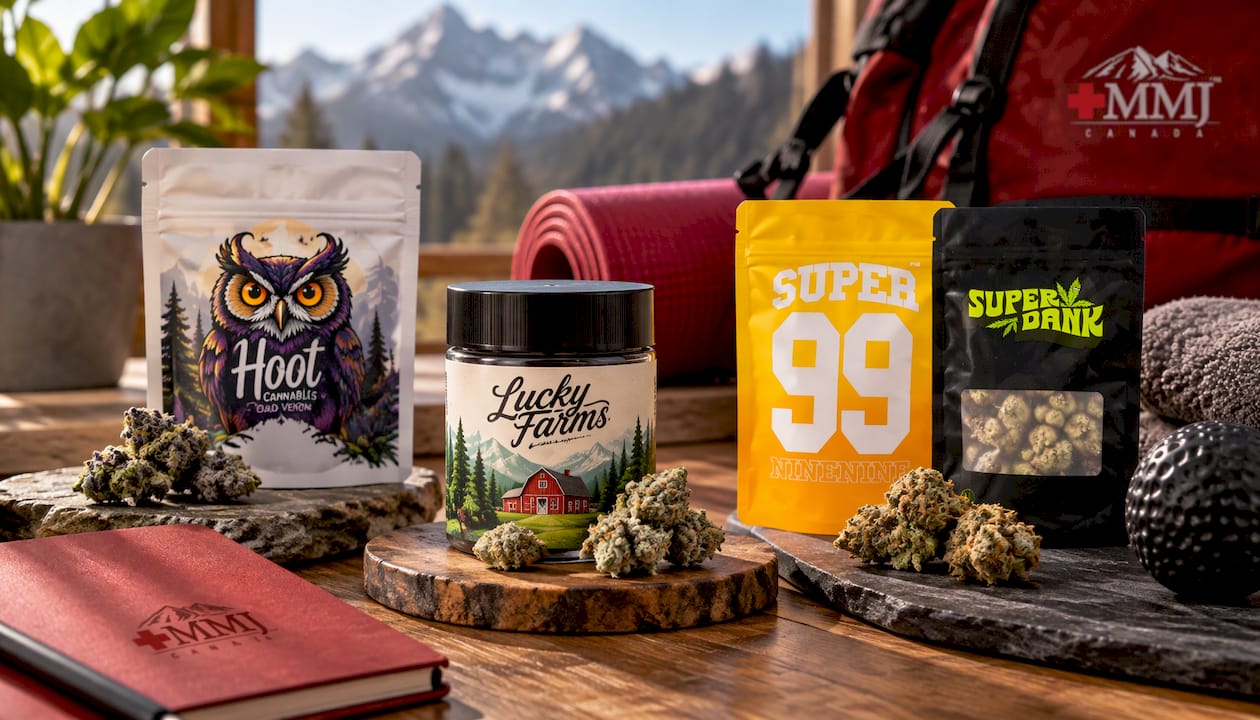
If you are starting out, begin in the CBD category or browse the full range on MMJ Canada.
FAQ
Does weed actually help back pain?
A 2025 phase 3 trial of 820 adults found a full-spectrum cannabis extract reduced chronic lower back pain more than placebo and improved sleep and daily function. A 2024 guideline gives a strong recommendation for cannabis-based medicines in chronic pain. Results depend on the product, so choose the cannabinoid mix and format with care.
What is the best type of weed for back pain?
The guideline finds the strongest pain evidence for THC formulations, and notes that adding CBD can soften THC side effects. Many people choose a balanced or THC-dominant product in the evening and a CBD-dominant one in the daytime. Indica-labeled flower is a popular choice for night-time use.
Can weed help nerve pain?
The 2024 guideline includes central and peripheral neuropathic pain in its strong recommendation for cannabis-based medicines. The VER-01 trial also recorded improved neuropathic symptoms in people with chronic low back pain. A low-dose, balanced THC and CBD product is a common starting point.
Is it better to smoke, vape or eat cannabis for back pain?
Vaporizing dried flower acts fast and suits flare-ups, and the guideline says smoking is less favorable because of combustion. Edibles and tinctures start slower but last longer, which suits constant or night-time pain. Topicals target a single sore area.
What are the side effects of cannabis for pain?
The most common are dizziness, nausea, fatigue, dry mouth and drowsiness, and most are mild to moderate. They are linked mainly to THC and generally ease within 48 hours or when the dose stops rising. Starting with a low dose and raising it slowly is the best way to limit them.
Sources
- Full-spectrum extract from Cannabis sativa DKJ127 for chronic low back pain, Nature Medicine (2025)
- Efficacy and safety of cannabinoid-based interventions for low back pain, systematic review (2026)
- Ten-year outcomes of medical cannabis for chronic low back pain, European Spine Journal (2026)
- Long-term inhaled cannabis therapy for chronic low back pain, Hasharon Hospital study (2026)
- Clinical practice guidelines for cannabis and cannabinoid-based medicines in chronic pain (2024)
- Medical cannabis: a review from the American Society of Pain and Neuroscience (2023)
- NICE guideline NG144: cannabis-based medicinal products, recommendations
- Medical cannabis in the United States: comparing 2017 and 2024