

Blue Lobster is a modern dessert-style hybrid, reported as a cross of Apples & Bananas and Eye Candy. It is known for a tart-fruit aroma, a euphoric but functional high and high THC. Black Maple, the other strain people search alongside it, is a different plant: a grape-and-syrup indica-leaning hybrid from Dulce de Uva and Sherbanger. This guide covers where each strain comes from, how they smell and taste, what people report feeling, and how to shop for something similar without being misled by a name.
If you are an adult in Canada looking for comparable flower, our flower category lists lab-tested options, and the sections below show what to look for.
TL;DR
- Blue Lobster is reported as an Apples & Bananas x Eye Candy cross, selected and named by the Maine Trees team, and sits in the indica-leaning hybrid group.
- Expect blueberry, plum, apple and citrus on the nose, with gas and mint in the background, and a euphoric, relaxed high that reviewers describe as not heavy.
- Reported THC runs roughly 25% to 35% depending on grower and batch, so the label on your own jar matters more than the strain name.
- Black Maple (Dulce de Uva x Sherbanger) is grape, sandalwood and syrup, with a physically relaxing but creative high.
- Impairment from cannabis can last six hours or longer, so plan around it and start low.
Table of Contents
- Where Blue Lobster comes from
- Aroma and flavor
- Reported effects
- How strong is Blue Lobster?
- Black Maple: the other strain people search for
- Why strain names are only a starting point
- Finding comparable flower in Canada
- Using high-THC strains responsibly
- Legal note for US readers
- FAQ
- Sources
Where Blue Lobster comes from
The most consistent account of the strain’s origin comes from GreenState’s Blue Lobster profile, which credits the Maine Trees breeders with crossing Apples & Bananas and Eye Candy. Apples & Bananas was bred by Compound Genetics. Further back, the family tree reaches classics such as GSC, Master Kush and The White, which explains the sweet, gassy, dessert-leaning character.
Two parents, then, and each contributes something recognizable:
- Apples & Bananas: a fruit-forward, creamy parent that gives the strain its sweet, candy-like top note.
- Eye Candy: a colorful, flavorful parent that adds the berry and tart edge.
The name matters here. “Blue Lobster” can mean the original selected cut that the Maine Trees team picked out of a seed population, or it can mean a later seed product that borrows the name or the same parents. Those are related, but they are not automatically the same plant. When you compare notes with a friend or a review, ask which version they tried and who grew it. Two jars with the same name can smell and hit differently, and that is normal for modern hybrids.
Aroma and flavor
Reviewers tend to agree on the broad picture: sweet fruit up front, something sharper underneath. GreenState reports a terpene profile led by citrusy limonene, herbaceous myrcene, peppery caryophyllene and floral linalool. Terpenes are the aromatic compounds in cannabis that shape smell and taste, and they are a big reason one cultivar smells like candy and another like pine.
In practice, here is what people describe:
- Blueberry, plum and apple. The fruit notes dominate the first impression.
- Citrus and a tart finish. This comes from the limonene and keeps the sweetness from feeling flat.
- Gas, earth and mint. A fuel-like undertone sits behind the candy, which is typical of the Gelato and Cookies side of the family.
If you grind a good sample and the smell is dull or hay-like, that is a quality signal about freshness and curing, not about the strain. Fresh, well-kept flower should smell vivid.
Reported effects
Experiences are personal, and the same flower can feel different from one day to the next. Still, reports on Blue Lobster are fairly consistent. GreenState describes a potent high that blends joy and relaxation without the couchlock that heavier indicas can bring. People commonly mention:
- A quick, uplifting head change that turns calm and sociable.
- Relaxation in the body that stays light enough for conversation, music or a movie.
- Dry mouth and dry eyes as the most common downsides.
Because the strain is strong, new or occasional consumers should treat it with care. Some reviewers report that a high this intense can tip into anxiety for sensitive people, which is a reason to start with a small amount and wait before taking more. If anxiety is your main reason for exploring cannabis, our guide to CBD vs THC for anxiety explains how the two cannabinoids differ, and our article on cannabis for chronic pain covers the other common reason people look for relaxing flower.
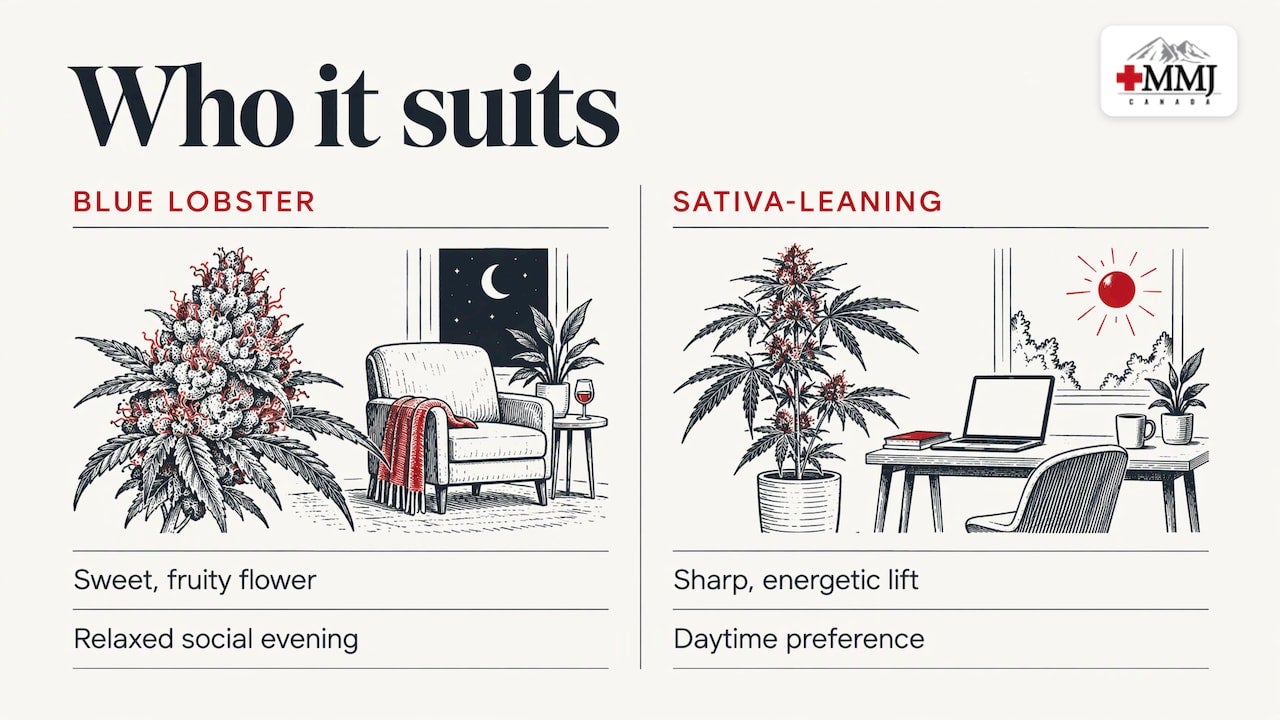
Who it tends to suit
People who like sweet, fruity flower and want a relaxed but social evening are the usual fans. Someone who wants a sharp, energetic daytime lift will likely prefer a sativa-leaning cultivar, and we cover those in our piece on sativa strains.
How strong is Blue Lobster?
Strong, but the number moves. GreenState says THC can land anywhere from 25% to 35% depending on how the plant is grown, and it notes recent batches from two licensed producers testing around 29%. Treat that as a range, not a promise.
What drives the difference:
- Grower and phenotype. The same genetics, grown by different teams, give different potency and terpene content.
- Drying and curing. Poor handling lowers both aroma and effective potency.
- Product form. Flower, live resin and other extracts do not share the same THC numbers. A concentrate can test far higher than the flower it came from.
- Batch. Even the same producer’s next harvest can differ by a few points.
The practical lesson: read the lab results for the specific batch you are buying, not a general strain page. THC percentage on the label tells you how much to take far better than a strain name does.
Black Maple: the other strain people search for
Black Maple is a separate cultivar from the Colorado breeder Bloom Seed Co., made by crossing Dulce de Uva and Sherbanger. Dulce de Uva means “grape candy” in Spanish, and that parent explains most of the flavor. As Denver Westword’s reviewer put it in his 2023 Black Maple review, the strain tastes more of white grapes and sandalwood than of maple syrup. He also praised a flexible, creative and jovial high that stays pleasant despite physical relaxation.
Here is how the two compare in plain terms:
| Blue Lobster | Black Maple | |
|---|---|---|
| Parents | Apples & Bananas x Eye Candy | Dulce de Uva x Sherbanger |
| Reported type | Indica-leaning hybrid | Indica-leaning hybrid |
| Flavor | Blueberry, plum, apple, citrus, gas, mint | Grape, sandalwood, syrup, pepper |
| Reported feel | Euphoric, social, relaxed without couchlock | Creative, jovial, physically relaxed |
| Look | Colorful, frosty | Dark purple, dense |
If you like one, you will probably like the other: both are dessert-style cultivars with a layered smell and a calm, happy effect. Black Maple leans toward grape and dark spice, Blue Lobster toward blueberry and tart fruit.
Why strain names are only a starting point
Strain names work like wine grape names: they hint at style, not at an exact result. Two reasons to keep that in mind:
- Names are reused. As noted above, “Blue Lobster” can refer to a specific cut or to a seed line with similar genetics. The same applies to Black Maple, which has a well-known selection called Black Maple #22 that is distinct from other versions.
- Chemistry beats branding. Canada’s national substance-use agency, in its Knowing Your Limits with Cannabis guide, says that THC and CBD levels matter more to your experience than the strain name. That is why a lab report is the most useful thing on a product page.
A good shopping habit is to compare three things on any listing: THC and CBD percentages, the dominant terpenes, and the licensed producer. Those tell you far more than the marketing name.
Finding comparable flower in Canada
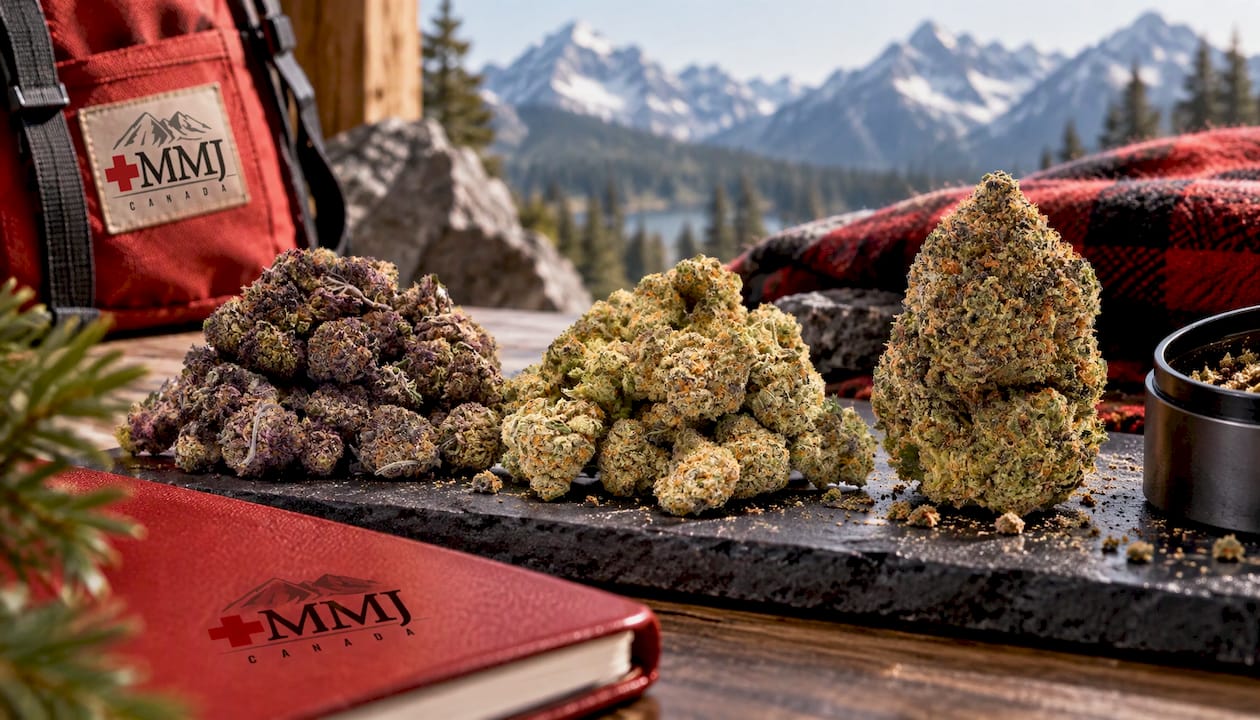
If Blue Lobster or Black Maple is not available, the aim is to match the profile: sweet fruit or grape aroma, hybrid or indica-leaning genetics, and a THC level you are comfortable with. We sell lab-tested cannabis and CBD products and our products comply with Canadian regulations, so you can browse with that baseline in place. Adults in Canada can shop our flower category, and three indica-leaning examples you can look at today are Lucky Farms Black Mamba (smalls), Lucky Farms Orange Blossom Special (smalls) and Lucky Farms Death Bubba.
Not everyone wants to smoke. Our range also includes edibles, vapes, concentrates and beverages. If you want to understand different forms first, our articles on cannabis tinctures and the types of cannabis in shatter bars explain how they differ. For readers who want CBD without a high, including pet owners, the CBD category is the place to start. Our offering is for adults in Canada only.
Using high-THC strains responsibly
Strong cultivars such as these deserve a plan. The CCSA guide gives clear points:
- Impairment lasts. Cannabis can impair driving and operating machinery for six hours or longer, so do not drive after using.
- Smoking affects the lungs. Cannabis smoke contains many of the same toxic chemicals and fine particles as tobacco smoke, and regular smoking can cause coughing and wheezing.
- Dependence is possible. Cannabis use disorder can be mild, moderate or severe.
- Lower-risk habits. The guide recommends occasional use, for example once a week at most, and choosing lower-THC or higher-CBD products.
If you take medication, are pregnant or nursing, or have a heart, lung or mental health condition, talk with your doctor or pharmacist before using cannabis. This matters especially for strong, high-THC flower and for anyone prone to anxiety.
A simple routine for a first session with an unfamiliar, potent strain:
- Use a small amount, well below what you think you can handle.
- Wait before using more. Inhaled effects come on within minutes, while edibles take much longer.
- Stay somewhere comfortable, with water, and with no plans to drive.
- Note the batch, THC and terpenes, and how you felt, so you can repeat what worked.
Legal note for US readers
Cannabis laws differ by state in the US and are different again in Canada. The shopping information on our site is for adults in Canada. Wherever you live, check the rules that apply to you before buying or traveling with cannabis.
FAQ
Is Blue Lobster a sativa or an indica?
It is usually described as an indica-leaning hybrid, often given as roughly 60% indica and 40% sativa. Reviewers say the effect is relaxed and euphoric without being heavy. Those percentages are a rough guide, and your experience depends more on THC level and dose.
What is Blue Lobster’s lineage?
It is reported as a cross of Apples & Bananas and Eye Candy, selected and named by the Maine Trees team, according to GreenState. Because the name is also used for later seed lines, check who produced the version you are looking at.
What does Black Maple taste like?
Despite the name, a Denver Westword reviewer found it closer to white grapes and sandalwood than to syrup, which he linked to the Dulce de Uva parent. Other reports add dark spice, oak and a gassy finish.
How long do the effects last?
Inhaled effects vary by person and dose, and some reviewers describe Blue Lobster’s high lasting around three hours. Impairment, however, can last six hours or longer, according to the CCSA, so avoid driving well beyond the point you feel normal.
Can the same strain differ from jar to jar?
Yes. THC for Blue Lobster is reported anywhere from 25% to 35% depending on how the plant is grown, so growers, curing and batch all change the result. Read the lab results on the specific product.
Sources
- Blue Lobster strain profile, GreenState
- Knowing Your Limits with Cannabis: A Practical Guide, CCSA (2022)
- Black Maple Strain Review, Denver Westword (2023)