


If your dog is slow to get up, hesitates on the stairs or no longer chases the ball, CBD is probably on your list of things to try. The best-known trials in dogs with osteoarthritis (the most common form of arthritis, where joint cartilage wears down) found less pain and more activity at the doses tested. The results depend on a vet-guided dose, a product whose strength is verified by a lab, and a plan to watch your dog’s bloodwork. We sell lab-tested CBD pet tinctures, so this guide covers the full routine, step by step.
TL;DR
- A placebo-controlled Cornell trial in 16 dogs with osteoarthritis found that 2 mg/kg of CBD oil every 12 hours for four weeks lowered owner-reported pain and raised activity.
- Dose depends on your dog’s weight, product strength and other medicines, so settle it with your veterinarian. Study doses are reference points, not a chart for owners.
- The side effect most often reported is a rise in the liver enzyme alkaline phosphatase (ALP), plus soft stools and sleepiness. Ask your vet about a blood check.
- Pick a product with a third-party lab report, a stated CBD concentration and under 0.3% THC.
- Give CBD alongside your vet’s arthritis plan, not in place of it.
Table of Contents
- What arthritis does to a dog
- What the research shows
- Dose: a conversation with your vet
- Safety: what to watch and who should be careful
- How to choose a CBD product for your dog
- A practical routine for the first two months
- Where our products fit
- Signs the plan is working, and what to do if it isn’t
- FAQ
- Sources
What arthritis does to a dog
Osteoarthritis is the long-term breakdown of joint cartilage. Bone rubs on bone, the joint becomes inflamed and movement hurts. It builds slowly. Owners often put early signs down to age: stiffness after naps, shorter walks, reluctance to jump into the car, licking at a hip or elbow.
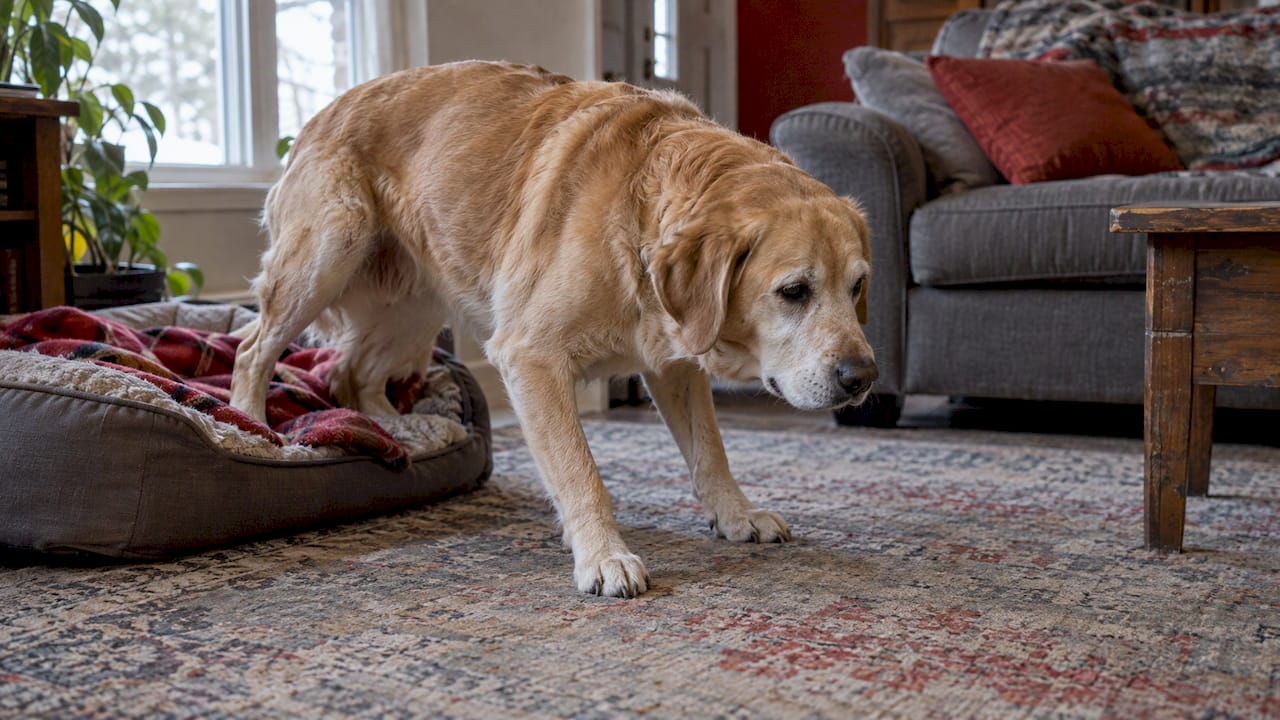
That slow onset matters for CBD. A product is not judged by one good day. You are looking for a change over weeks in how easily your dog rises, climbs and plays. Keep a simple log from the start, with dates, so you and your vet can compare.
What the research shows
The most cited trial is from Cornell University. In a randomized, placebo-controlled, blinded crossover study, 16 dogs with radiographic osteoarthritis received CBD oil at 2 mg/kg every 12 hours for four weeks. Owner-reported pain dropped and activity rose significantly (p<0.01), and veterinary pain scores improved too (p<0.02). Owners reported no side effects.
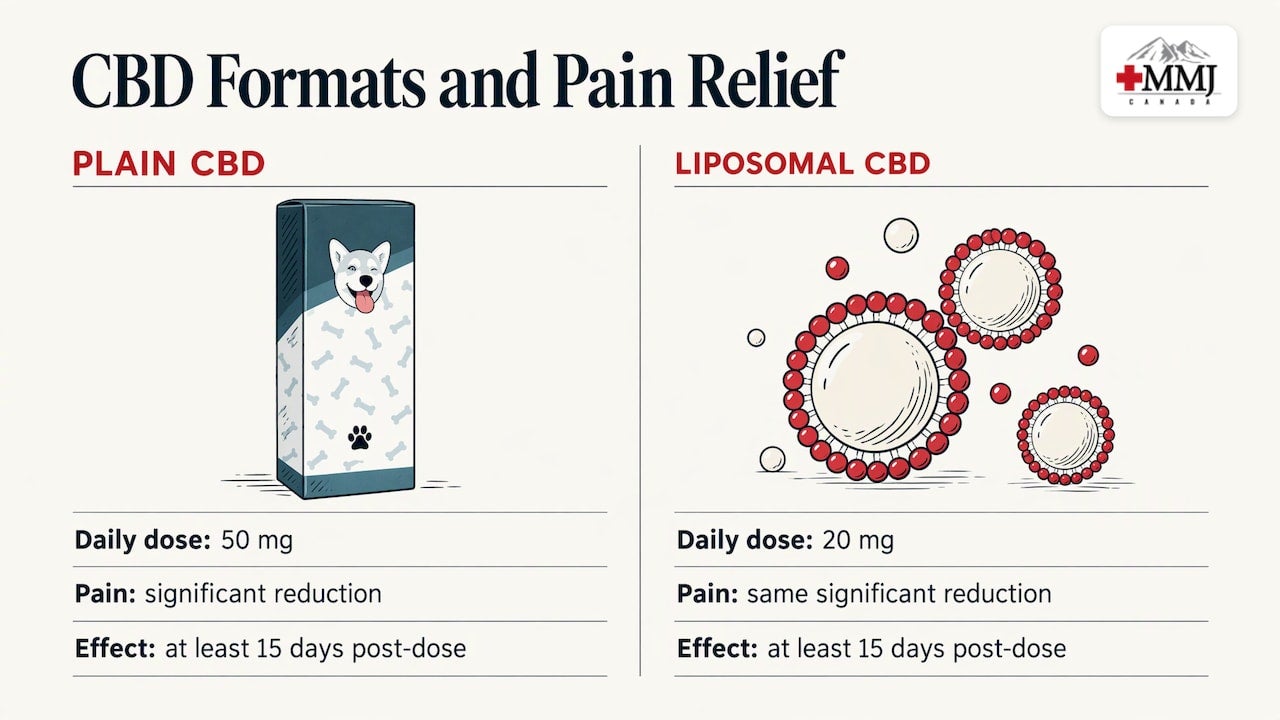
A second randomized, double-blind, placebo-controlled trial looked at large dogs, averaging 41 kg, with osteoarthritis. Dogs given 50 mg a day of CBD, or 20 mg a day of a liposomal form, showed statistically significant pain reductions (p<0.01). The effect lasted at least 15 days after dosing stopped. The liposomal form (CBD wrapped in fat-based particles) at 20 mg a day worked as well as 50 mg a day of the plain form. That is one reason to compare product formats with your vet.
A 2026 review in the Journal of Small Animal Practice places canine osteoarthritis among the conditions with the strongest evidence for CBD, and describes it as an add-on to a dog’s existing care. That is how most owners use it: next to the weight management, exercise changes and medicines their vet already recommends.
What the trials looked at
Most studies run four to twelve weeks, so a fair trial at home is also measured in weeks. In the 2023 meta-analysis of dog osteoarthritis trials, formulations included full-spectrum CBD oil, isolated CBD oil and liposomal CBD oil. Doses clustered around 2 to 2.5 mg/kg every 12 hours. One trial started at 0.25 mg/kg once daily and moved up to 0.50 to 0.75 mg/kg every 12 hours.
Those figures show what researchers tested. They do not tell you what to give your own dog.
Dose: a conversation with your vet
There is no standard therapeutic CBD dose for dogs. Studies used different products, strengths and schedules, and Cornell’s Riney Canine Health Center treats dosing as a decision for each patient.
A vet weighs these things:
- Your dog’s weight and the severity of the arthritis.
- The CBD concentration in the bottle, in mg per mL.
- Any other medicines your dog takes.
- Liver values on recent bloodwork.
Here is how the arithmetic works, as an illustration of why product strength matters. The Cornell trial used 2 mg/kg per dose. A 20 kg dog (about 44 lb) would get 40 mg per dose in that study. Whether that suits your dog is your vet’s call. A bottle labeled 25 mg/mL would need 1.6 mL for that amount, while a 10 mg/mL bottle would need 4 mL. The same dose looks very different depending on the label, so the concentration must be right.
That is why a verified concentration is so useful. Cornell’s 2020 testing of commercial pet products found CBD and CBDA concentrations from 0 to 70 mg/mL, with most between 20 and 25 mg/mL. When you can match the lab report to the label, your vet can calculate with confidence.
Safety: what to watch and who should be careful
Cornell notes that safety studies at up to 10 mg/kg a day for up to 36 weeks suggest CBD is largely well tolerated. Still, a few points deserve attention.
Liver enzyme (ALP) rise
In the Cornell arthritis trial, ALP rose significantly during CBD treatment. A 2026 review in the Journal of Small Animal Practice describes ALP elevations as repeatedly reported in dogs, of uncertain clinical significance. The practical step is simple: tell your vet your dog is on CBD and ask when to run bloodwork. In the large-dog trial above, blood counts, metabolic panels and liver values showed no significant changes.
Other effects
Mild effects reported across dog studies include soft stools or diarrhea and sleepiness. If your dog seems wobbly, unusually drowsy or off food, pause and call your vet.
Other medicines
CBD can affect liver enzymes called cytochrome P450, which also process many drugs. The 2023 meta-analysis also raises a theoretical interaction with NSAIDs that selectively block COX-2, which may slow CBD’s breakdown. The same paper notes that no dog study has tested CBD with gabapentin, amitriptyline, fish oil, glucosamine or chondroitin, all common in arthritis plans. So list every medicine and supplement when you talk to your vet. Dogs with liver or kidney disease, or a history of pancreatitis, need the vet’s go-ahead first.
Give no more than your vet advises, and never switch from a prescribed pain medicine to CBD on your own. Arthritis pain that is sudden, severe or comes with loss of appetite needs a vet visit, not a supplement trial.
How to choose a CBD product for your dog
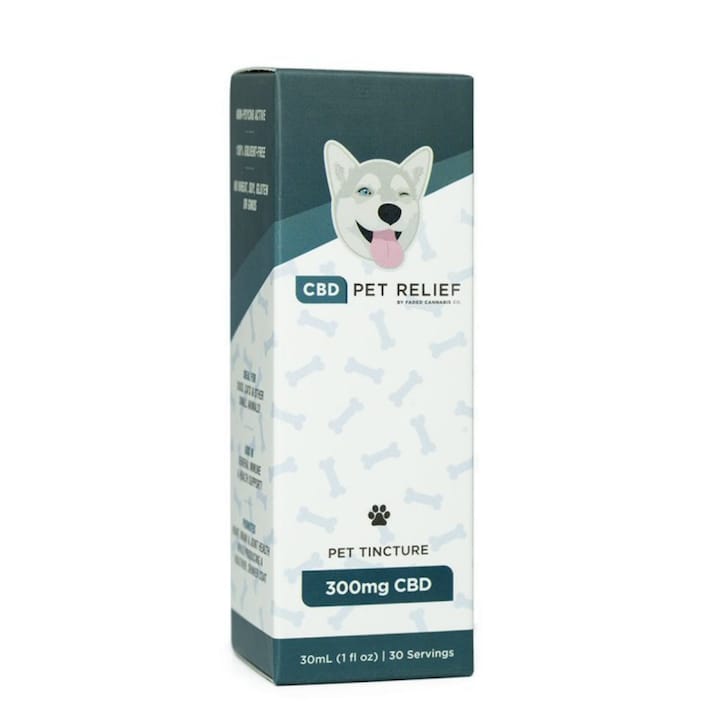
Quality is the part owners can control. Cornell’s Riney Canine Health Center advises products made from certified hemp with less than 0.3% THC (the compound that causes a high, and the one dogs tolerate poorly), from a company that publishes third-party analysis. That analysis should cover heavy metals, pesticides, extraction solvents, harmful bacteria and mycotoxins (toxins from mold).
Use this checklist when you read a product page:
- A certificate of analysis for the batch. It should state the CBD content in mg per mL and the THC level.
- A concentration you can do math with. The label should give total CBD per bottle and per mL.
- A pet-specific format. A tincture (liquid drops) lets you adjust the amount to your dog’s weight in small steps, which suits the mg/kg dosing used in studies.
- Clean carrier and ingredients. Check for added flavors or sweeteners your dog should not have.
- A seller that is transparent about testing. Cornell also points to National Animal Supplement Council membership as a sign of audits covering manufacturing, label accuracy and adverse-event reporting.
Mmjcanada sells lab-tested cannabis and CBD products, built around compliance with Canadian regulations. Our pet range includes Faded Cannabis Co. CBD pet tinctures and the MOTA Animalitos CBD pet tincture in 150 mg to 300 mg strengths. The strength range is useful because your vet can then match a bottle to your dog’s weight.
A practical routine for the first two months
A structured start gives you and your vet something to evaluate.
- Book a vet visit before the first dose. Bring the product, its lab report and a list of your dog’s medicines. Ask about dose, schedule and bloodwork timing.
- Record a baseline. Note how long your dog takes to stand, whether it manages the stairs, how far it walks and how it behaves in the evening. Short videos help.
- Start where your vet says and change one thing at a time. Do not add a new supplement or alter other medicines in the same week, or you will not know what caused a change.
- Give it consistently. The trials gave CBD on a fixed schedule, often every 12 hours. Giving it with food at the same times each day keeps things steady.
- Review at four weeks. Studies commonly measured outcomes at around this point. Compare your log with the baseline and share it with your vet.
- Schedule follow-up bloodwork. Your vet will say how often, particularly if your dog stays on CBD long term or takes other medicines.
Where our products fit
Owners who have worked through the vet conversation and the checklist usually need two things: a tincture in a strength that suits their dog’s size, and a retailer that stands behind testing. Our CBD category lists the pet tinctures, and the Milky Way Extracts tinctures are also in the CBD range. We sell lab-tested products, all compliant with Canadian regulations, to adults in Canada through our online store.
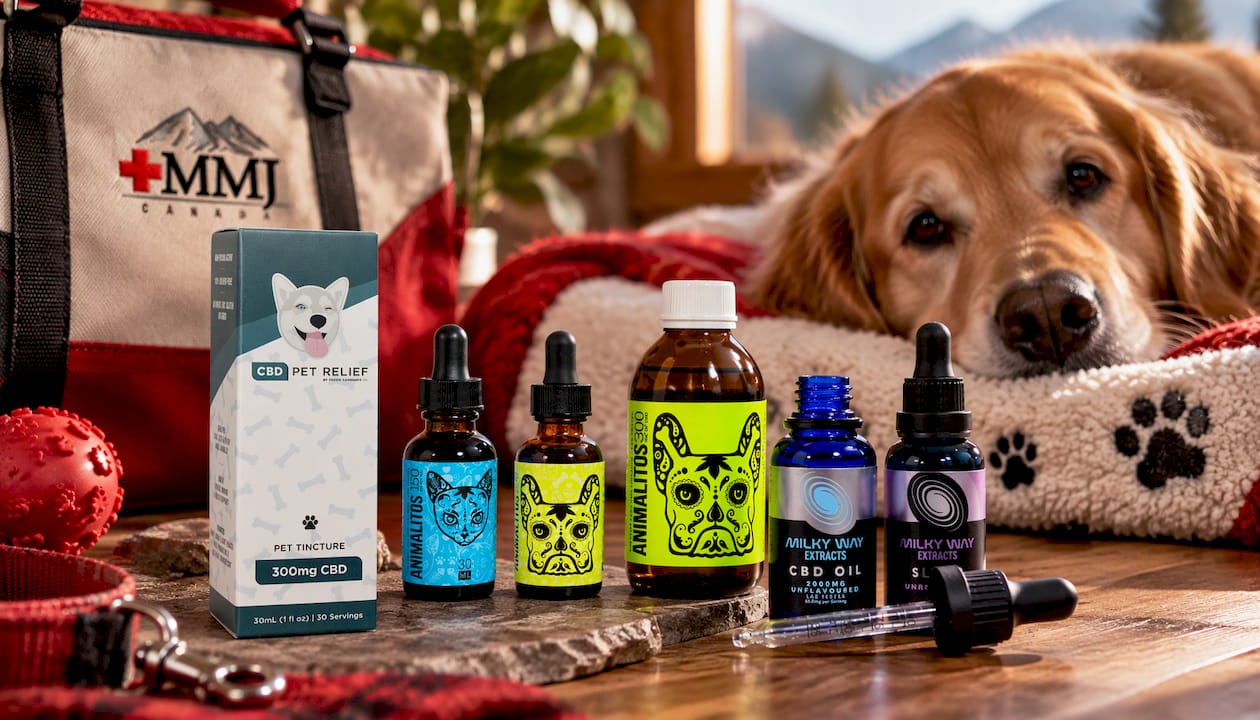
Bring the lab report and label to your vet, and they can turn the numbers into a dosing plan. You can browse the full range at mmjcanada.ch.
Signs the plan is working, and what to do if it isn’t
Improvement tends to be gradual and practical: easier mornings, willingness to take the stairs, longer walks, more play. In the Cornell trial, owners rated activity and comfort. Your log is your version of that scoring.
If you see nothing at the four-week review, bring that to your vet instead of raising the dose yourself. Your vet may adjust the dose, check the product’s concentration or look at other parts of the plan, such as weight, exercise, joint-support diets and prescription pain relief. Arthritis care usually layers several measures, and CBD is one of them.
FAQ
How long does CBD take to work for a dog with arthritis?
The trials ran for four to twelve weeks, so judge it over that kind of window rather than days. In the Cornell study, the benefits appeared over four weeks of twice-daily dosing. Keep a log and review it with your vet at about four weeks.
How much CBD can I give my dog for arthritis?
No standard dose exists, so your vet should set it. Studies used about 2 mg/kg every 12 hours in one trial, and 20 to 50 mg a day in large dogs in another, but those are reference points. Your dog’s weight, the bottle’s mg/mL and other medicines all change the answer.
Is CBD safe to give with my dog’s other arthritis medicines?
It can be, but your vet needs the full list first. CBD affects the liver enzymes that process many drugs, and a theoretical interaction with COX-2-selective NSAIDs has been described. Don’t stop or change a prescribed medicine without your vet’s say-so.
What should a good dog CBD product have?
Look for hemp-derived CBD with less than 0.3% THC, a batch lab report covering contaminants such as heavy metals, pesticides, solvents and mycotoxins, and a clearly stated concentration in mg per mL. A tincture makes it easy to measure by weight.
Sources
- Gamble et al., Pharmacokinetics, Safety, and Clinical Efficacy of Cannabidiol Treatment in Osteoarthritic Dogs (Frontiers in Veterinary Science, 2018)
- Verrico et al., A randomized, double-blind, placebo-controlled study of daily cannabidiol for the treatment of canine osteoarthritis pain (2020)
- Patikorn et al., Efficacy and safety of cannabidiol for the treatment of canine osteoarthritis (Frontiers in Veterinary Science, 2023)
- Sano, Cannabidiol in small animal practice: current evidence (Journal of Small Animal Practice, 2026)
- Cornell Riney Canine Health Center, The ABC’s of cannabidiol (CBD) from hemp