


A low dose edible contains about 2.5 to 5 mg of THC per serving. A microdose is smaller still, at roughly 1 to 2.5 mg. Anything past 10 mg is moderate to strong, and the effects are far more intense and last far longer. Start at the bottom of that range, wait at least two hours before you take more, and read the milligrams per piece rather than the milligrams per package. The rest of this guide explains why, so you can choose gummies, chocolates or drinks that fit your tolerance. At MMJ Canada’s edibles shop, each product page lists its THC content, so you can match a dose to your plan before you order.
TL;DR
- Low dose means roughly 2.5 to 5 mg THC per serving. Microdoses run 1 to 2.5 mg, and 20 mg or more is a large dose.
- Edibles can take up to 2 hours to work and last 4 to 12 hours, with some residual effects reaching 24 hours. Do not re-dose early.
- Strong and high-potency edibles are for people with established tolerance. New users, people under 25 and anyone with a personal or family history of serious mental health disorders should stay at the low end.
- Always compare mg per piece with mg per package. A 150 mg pack split into 15 pieces is 10 mg each.
Table of Contents
- What counts as a low dose edible?
- Why edibles feel different from smoking or vaping
- How long do low dose edibles take to work?
- What about fast acting edibles?
- Low dose THC gummies: how to read the label
- THC with CBD: a gentler pairing?
- Strong and high dose edibles
- A simple plan for your first low dose
- How to choose top THC gummies and edibles
- Where MMJ Canada fits
- FAQ
- Sources
What counts as a low dose edible?
There is no single legal definition, but the guidance is consistent. One U.S. guide sorts doses this way: 1 to 2.5 mg is a microdose, 3 to 5 mg is low, 5 to 15 mg is moderate, 20 to 30 mg is large, and 30 mg or more is a macro dose it does not recommend for most people. It suggests starting at 2.5 mg.
Government health agencies point the same way. British Columbia’s public safety fact sheet advises beginners to start with 2.5 mg of THC or less. Maryland’s state cannabis education page recommends a starting serving of 2.5 to 5 mg and suggests choosing edibles with 5 mg or less.
| Dose per serving | Common label | What to expect |
|---|---|---|
| 1 to 2.5 mg | Microdose | Subtle at most. A common first step for new users. |
| 3 to 5 mg | Low dose | A mild effect, though some people still feel impaired. |
| 5 to 15 mg | Moderate | A clear effect. Better suited to people who already know their response. |
| 20 to 30 mg | Large | Strong. Not for beginners. |
| 30 mg and up | Macro | Very strong, with a higher risk of unpleasant effects. |
These bands come from the GreenState dosing guide. Your own response depends on body weight, metabolism, sex and whether you ate recently, so treat the numbers as starting points.
Why edibles feel different from smoking or vaping
When you inhale THC, it reaches your bloodstream within minutes. A 2016 review in the scientific literature puts the peak of inhaled THC at about 20 to 30 minutes, with effects tapering within 2 to 3 hours. Edibles take 30 to 90 minutes to start and peak at 2 to 4 hours after you eat them.
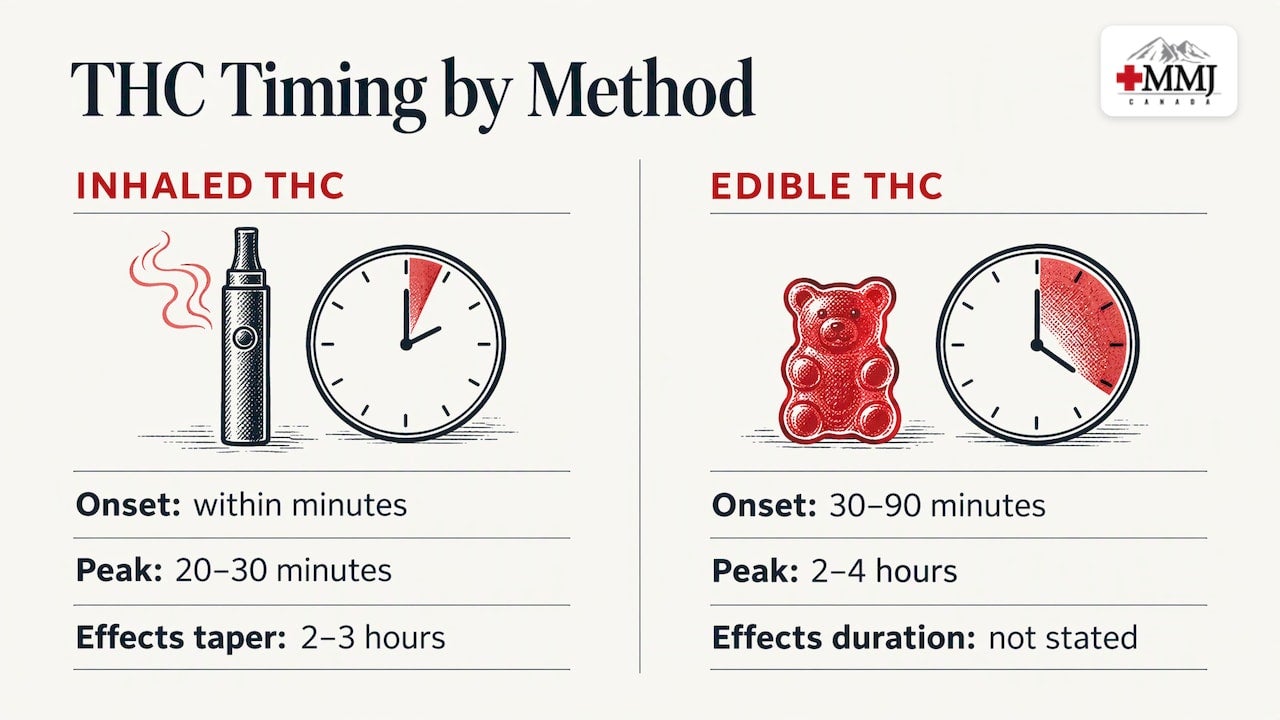
The reason is the liver. Northwell Health’s physicians explain that THC passes through the liver before it reaches the bloodstream, which changes the timeline compared with smoking. That is also why a gummy can feel stronger than the same amount of THC inhaled.
The delay creates the most common mistake. Dr. Diana Martins-Welch of Northwell describes it this way: people feel nothing, take a second gummy, and by the time the first one kicks in they have doubled their dose. A low dose only stays low if you give it time to work.
How long do low dose edibles take to work?
Plan on a long window, not a quick hit.
- Onset: Medical News Today reports that oral THC needs 30 to 90 minutes to begin working. British Columbia’s fact sheet says you may not feel anything for up to 2 hours.
- Peak: About 2 to 4 hours after eating.
- Duration: British Columbia lists 4 to 12 hours, with some residual effects for up to 24 hours. A low dose usually sits at the shorter end, but individual response varies.
Maryland’s guidance is simple: wait 2 hours to feel the full effects before consuming more. Set a timer when you take your first piece.
Food changes the picture too. British Columbia notes that timing depends on weight, metabolism, sex and whether you ate on an empty stomach. If you try the same product on two different days, expect it to hit differently.
What about fast acting edibles?
People searching for fast acting edibles usually want to avoid waiting two hours. Products that you hold in your mouth, such as lozenges, lollipops and tinctures, may act sooner because they can absorb through the tissues of the mouth and bypass part of the digestive system. Medical News Today notes that sublingual products may act faster than a swallowed gummy.
Fast does not mean safe to stack. Faster onset still needs a small first dose and a deliberate wait before the next one. If speed matters to you, browse the MMJ Canada edibles category for lollipops and similar formats, and the CBD products category if you prefer a non-intoxicating option. Our guide to cannabis tinctures explains another way to take a measured amount.
Low dose THC gummies: how to read the label
Gummies are the most popular format because the dose is built into each piece. Still, three numbers on the label can confuse you.
- Total THC in the package. This is the big number on the front, such as 150 mg.
- Pieces in the package. A 15-piece pack is the denominator.
- THC per piece. Divide the first number by the second. 150 mg across 15 pieces is 10 mg each.
In Canada, the rules cap the amount. Section 102.7 of the Cannabis Regulations says edible cannabis must not contain more than 10 mg of THC per immediate container. A 2020 review adds that regulated Canadian edibles are sold in individual packages of no more than 10 mg THC, while unregulated products can contain much more.
In the United States, limits are set state by state. Rhode Island, for example, says a single edible serving cannot exceed 10 mg THC and a multi-serving package cannot exceed 100 mg, with child-resistant, opaque packaging. Other states differ, and JAMA Internal Medicine’s authors note that some states require testing for accurate labeling while others do not. Check the rules where you live.
A useful rule: 10 mg is a ceiling for one package in Canada, not a beginner’s dose. By the dose bands above, it falls in the moderate range. If you are new, aim for 2.5 to 5 mg per sitting and choose a product whose serving size lets you do that.
THC with CBD: a gentler pairing?
Many low dose products combine THC with CBD, a cannabinoid that does not cause a high. Buyers often choose these ratios for a more relaxed feel. If you want to understand how the two compounds differ, our article on CBD vs THC for anxiety walks through it. If you want no THC at all, see our page on THC-free options.
Pick a ratio by reading the label for both numbers, the same way you would for THC alone.
Strong and high dose edibles
Searches for strong THC gummies, strong weed edibles and high potency THC edibles come from people with established tolerance, and a few facts matter at that level.
What counts as strong. A typical intoxicating edible dose is 10 to 30 mg THC, according to a 2020 review. By the GreenState bands, 20 to 30 mg is large and 30 mg or more is a macro dose that most people should not take.
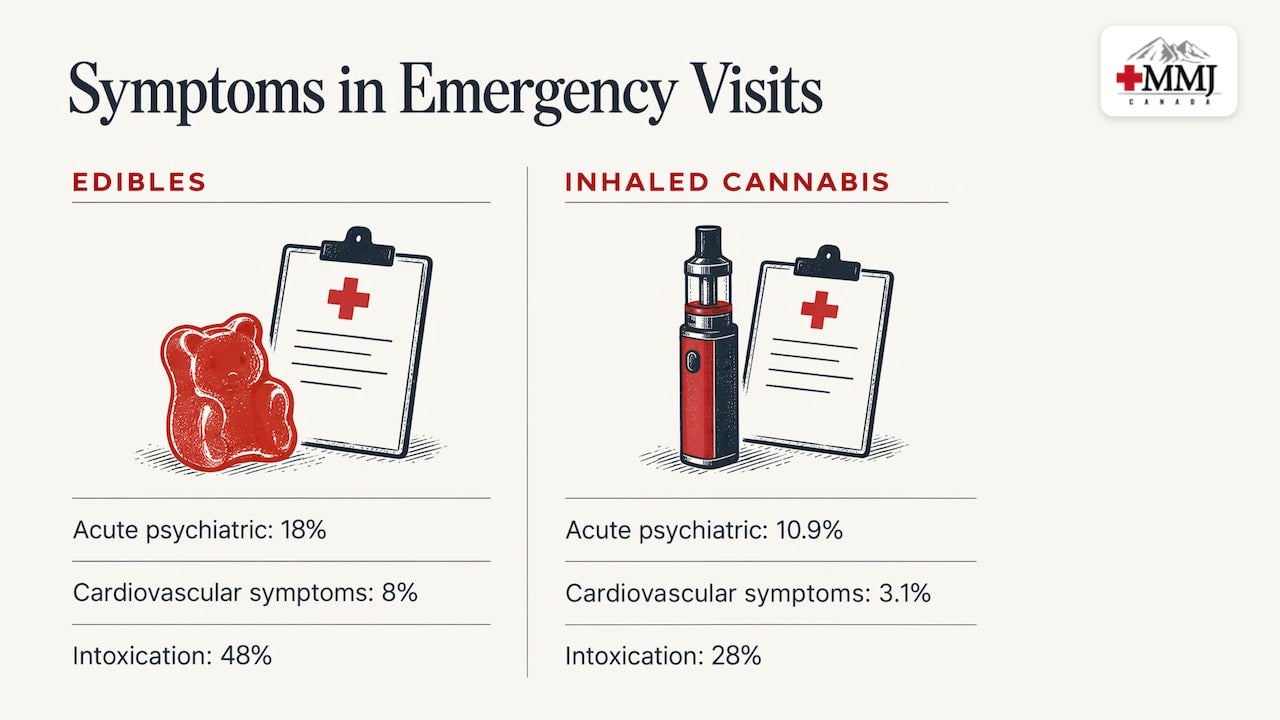
More is not always better. Higher doses mean longer and more intense impairment. The same 2020 review looked at 9,973 emergency department visits. Edible users were more likely than inhaled-cannabis users to arrive with acute psychiatric conditions (18% vs 10.9%), cardiovascular symptoms (8% vs 3.1%) and intoxication (48% vs 28%), although edible-related visits were less common overall. The delayed onset and long duration are part of the reason.
Who should stay at low doses. Maryland’s public-health guidance says new or inexperienced users, people under 25, and people with a personal or family history of serious mental health disorders should avoid higher-THC products. JAMA Internal Medicine’s authors add that the idea that edibles are relatively safe for older adults rests on very limited research, so older adults should use caution. If you have a health condition or take medication, talk to your doctor before you try any THC product.
Safe use at any dose. Do not drive or operate machinery after taking an edible. Keep products locked away from children. The 2020 review reports that edibles account for three-quarters of all cannabis-related exposures in children, so store them in their original child-resistant packaging, out of sight and reach.
A simple plan for your first low dose
- Pick a product with a clear per-piece dose. Look for 2.5 to 5 mg if you are new, and confirm the math on the label.
- Eat something first or with it, and keep the setting calm. Timing varies with an empty stomach.
- Take one serving and set a timer for at least two hours. British Columbia says you may not feel effects for that long.
- Do not add more during the wait. Edibles can peak around 4 hours.
- Keep a note. Write down the product, the dose, the time and how you felt. Next time, adjust by small steps only.
- Plan for a long window. Do not drive, and give yourself the rest of the day, since effects can last up to 12 hours.
How to choose top THC gummies and edibles
Searches for the best or top THC gummies cannot be answered with one name, because the best product depends on your goal and your tolerance. These criteria hold for everyone:
- A dose you can verify. The mg per piece must be on the label.
- Lab testing. Independent testing supports accurate labeling, which matters given that testing rules vary by jurisdiction.
- Consistent pieces. Gummies and chocolates made as single servings are easier to dose than ones you have to cut.
- A format that fits your timing. Swallowed gummies are slow; lozenges and tinctures can be quicker.
- Child-resistant packaging you will actually use.
Where MMJ Canada fits
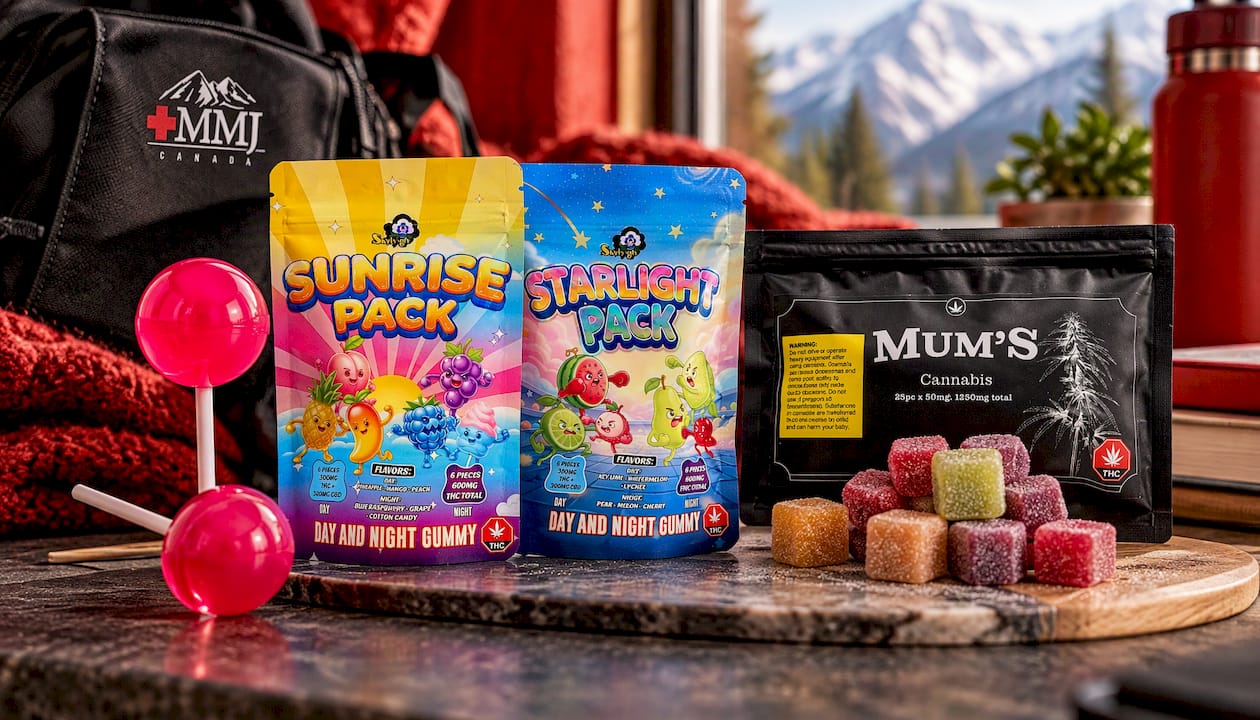
MMJ Canada is an online retailer of lab-tested cannabis and CBD products that complies with Canadian regulations. Our edibles category includes gummies, chocolates, lollipops and other formats, and our beverages and CBD range give you more ways to find a comfortable dose. For example, the Boost THC gummies in the 150 mg pack are listed as 15 pieces at 10 mg each, so you can see the per-piece dose at a glance.
Our products are for adults in Canada. Check each product page for its THC content before you order.
FAQ
How many mg is a low dose edible?
Most guidance puts a low dose at 2.5 to 5 mg of THC per serving, with 1 to 2.5 mg called a microdose. British Columbia’s fact sheet advises beginners to start at 2.5 mg or less. Moderate doses begin around 5 to 15 mg.
How long should I wait before taking more?
Wait at least two hours. Maryland’s guidance tells consumers to wait 2 hours to feel the full effects, and effects can peak around 4 hours. Taking more early is the most common way people end up with a much stronger dose than they planned.
Are high dose edibles safe?
They carry more risk. Higher doses bring stronger and longer impairment, and public-health guidance says new users, people under 25 and those with a personal or family history of serious mental health disorders should avoid higher-THC products. Do not drive, and speak with your doctor if you have a health condition or take medication.
Do low dose THC gummies get you high?
A low dose is meant to produce a mild effect, and a microdose may be barely noticeable. Response still varies with body weight, metabolism and food, and some people feel impaired even at 2.5 to 5 mg. Treat your first dose as a test and avoid driving.
Sources
- Edibles dosing: how to eat weed (GreenState)
- What you need to know to BeCannabisSmart (Maryland)
- Tasty THC: Promises and Challenges of Cannabis Edibles
- How Long Do Edibles Last? (Northwell Health)
- How long does it take for edibles to kick in? (Medical News Today)
- Cannabis Regulations, section 102.7 (Government of Canada)
- Edible cannabis (2020 review)
- Packaging Requirements (Rhode Island Department of Business Regulation)
- I Am Curious About Cannabis Edibles (JAMA Internal Medicine)