


A hybrid cannabis strain is a cultivar bred from indica and sativa parents, usually sold as “balanced” or leaning one way. The label is a starting point. What shapes your experience is the batch in front of you: its THC and CBD content, its terpenes (the aromatic compounds that give a flower its smell), its form and your dose. This guide shows how to read a hybrid the way a careful buyer does, so you can pick one that fits what you want from it.
At MMJ Canada we sell lab-tested flower, vapes, edibles, concentrates and CBD products to adults in Canada, including hybrids such as People’s Choice Strawberry Kush. The approach below is the one we would give a friend.
TL;DR
- “Hybrid” means a cross of indica and sativa genetics. A percentage like “60% indica” is a breeder’s estimate, not a lab result.
- A 2026 systematic review found that indica, sativa and hybrid labels do not reliably predict chemistry or effects. Check measured THC, CBD and terpenes instead.
- Start low and go slow. Health Canada-aligned guidance suggests a low THC amount, a long wait, and no driving for hours afterward.
- If you take prescription medication, have a medical condition, are pregnant or breastfeeding, talk to your doctor or pharmacist first.
- Pets need a veterinarian’s guidance. Cannabis and CBD products are not interchangeable between people and animals.
Table of Contents
- What “hybrid” actually means
- What effects people report, and why yours may differ
- How to choose a hybrid: a five-step routine
- Well-known hybrids and what to expect
- Using hybrids safely
- Hybrids, CBD and pets
- Where to shop for hybrids
- FAQ
- Sources
What “hybrid” actually means
Cannabis has traditionally been sorted into three bins. Indica is said to relax, sativa to energize, and hybrid to sit somewhere between. Hybrids are crosses of the two, and sellers often describe them as indica-dominant, sativa-dominant or evenly balanced. Most of the flower on the market today is a hybrid of some kind, because breeders have been crossing lines for decades.
The useful thing to know is that these three words are marketing shorthand rather than a measurement. A 2026 systematic review in the Journal of Cannabis Research pulled together 28 peer-reviewed reports and concluded that the indica, sativa and hybrid labels do not reliably predict composition or therapeutic effects. Its authors point to more defensible descriptors: measured chemistry, product form, route of use, dose and individual safety considerations.
Genetics tell a similar story. A 2019 genetic study of 30 commercially available strains bought from dispensaries in three US states found no clear genetic support for the common sativa, indica and hybrid categories. Most strains also contained at least one genetic outlier, which means two jars with the same name may not be the same product.
That is not a reason to ignore the label. It is a reason to treat it as the opening line of the conversation and let the lab results finish it.
What effects people report, and why yours may differ
People who like hybrids usually describe a middle path: some body relaxation with a clearer head than a heavy, sedating strain, or some lift without the racing feeling. That is the experience many reach for in the evening after work or on a weekend afternoon.
The research is more nuanced. The same 2026 review found limited agreement between consumer labels and the major cannabinoid profile, and its terpene findings were compound-specific and inconsistent, with no stable rule linking a label to a terpene profile. Some outcomes did show associations with labels, such as insomnia relief and low-arousal effects, though the way studies adjusted for THC content varied. A recent summary of the evidence notes that some studies found indica-labeled users felt less stimulated or slept better, while others found no meaningful differences for pain, fatigue or depression.
Why do effects differ so much? The RNCA cannabis awareness guide says everyone’s response depends on sex, age, existing medical conditions, experience, how often you use, the THC and CBD content, and whether you have had food, alcohol or other drugs. Your tolerance and your setting count as much as the strain name.
The practical takeaway: keep notes. Write down the product, batch, dose, time and how you felt. After three or four sessions you will know more about what works for you than any chart can tell you.
How to choose a hybrid: a five-step routine
1. Decide what you want the session to do
Be specific. Winding down after work, a social evening, creative focus, or help falling asleep are different goals. If your goal is a medical one, such as pain or sleep, talk to your physician before you start. Our guides on cannabis for chronic pain and weed for back pain walk through what the research shows and how to choose.
2. Pick the form that matches the timeline
The form changes the experience more than the strain name does. Inhaled flower and vapes act within minutes. Edibles act slowly. The RNCA guide says edible effects are felt within 30 minutes to 2 hours and can take up to 4 hours to fully appear. If you want something you can titrate puff by puff, browse flower or vapes. If you prefer a smoke-free, measured dose, look at edibles or beverages.
3. Read the THC and CBD numbers
THC is the compound responsible for the intoxicating and impairing effects, and it can also cause anxiety. CBD is not intoxicating. It may soften some of THC’s effects but it still acts on the brain, according to the RNCA guide. A hybrid with 28% THC and almost no CBD is a very different product from one at 15% THC with meaningful CBD, even if both are labeled “balanced.” Potency also varies from batch to batch of the same strain name, so always read the figures for the exact batch you are buying.
If you are weighing THC against CBD for a specific need, our comparison of CBD vs THC for anxiety explains the difference, and this guide to choosing a CBD product covers how origin, cultivation and THC level shape what you get.
4. Use terpenes as a smell test
Terpenes are not a guarantee of any effect, and the review above found no stable label-to-terpene rule. Still, they are the clearest sensory clue you have. If a listed terpene profile smells like citrus and you enjoyed the last batch that did, that is useful personal data. Treat it as a preference guide, not a prediction.
5. Insist on lab testing
Lab-tested products show what is actually in the package, which is the whole point when labels are unreliable. All our products are lab-tested and sold in line with Canadian regulations, so the potency you read on the listing is a measured figure for you to build your routine around.
Well-known hybrids and what to expect
You will keep running into the same names: Blue Dream, Girl Scout Cookies, OG Kush, Sour Diesel, Wedding Cake, Gorilla Glue #4, Gelato and Runtz. They are popular because they are widely grown and easy to recognize, and they are usually grouped as follows:
| Style | What sellers typically say | Typical use case |
|---|---|---|
| Indica-dominant hybrid | Body-heavy relaxation with a little lift | Evenings, winding down |
| Balanced hybrid | Calm body, clear head | Weekends, relaxed socializing |
| Sativa-dominant hybrid | Bright, talkative, upbeat | Daytime, creative projects |
Treat that table as vocabulary, not a promise. Even for a single named strain, details vary. One consumer health reference describes Blue Cheese as a hybrid at 80% indica and 20% sativa, with about 2% CBG (cannabigerol, a minor cannabinoid) and 18 to 20% THC, according to WebMD. That kind of specific breakdown is exactly what to look for on any listing, because it tells you far more than “hybrid” does.
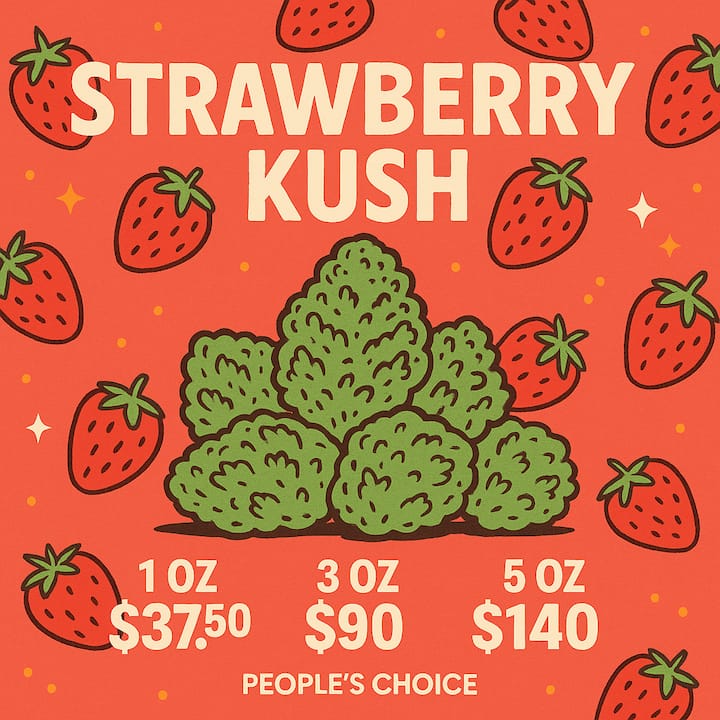
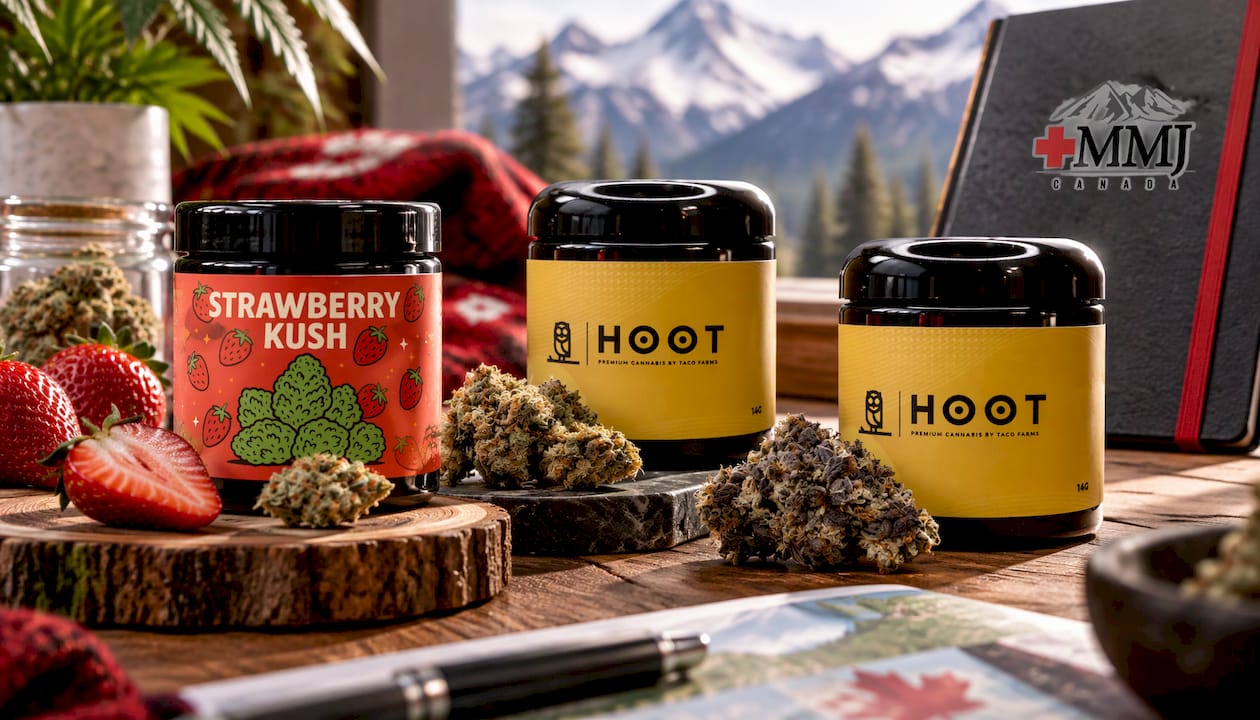
If you want a place to start, People’s Choice Strawberry Kush is a hybrid flower in our shop. Compare it with a sativa such as Hoot Cannabis Strawberry Haze or an indica such as Hoot Cannabis Diamond Kush to learn how the three feel to you.
Using hybrids safely
This is where a careful buyer spends the most time, and it applies to every strain.
Start low, go slow. The RNCA guide advises starting with a low amount of THC and waiting to feel the effects before taking more. For edibles it recommends products with 2.5 mg of THC or less, and notes that a whole package can contain up to 10 mg. Our article on low dose edibles explains what “low” really means in milligrams.
Do not drive. The 2022 Lower-Risk Cannabis Use Guidelines state that driving under the influence of cannabis approximately doubles the risk of a crash. Impairment can last about 6 to 8 hours after inhaling and 8 to 12 hours after edibles. CBD does not reliably cancel out THC-related impairment, and combining cannabis with alcohol increases driving impairment multifold.
Avoid mixing. The RNCA guide advises against combining cannabis with nicotine, alcohol, other drugs or health products.
Pregnancy and breastfeeding. The same lower-risk guidelines recommend that people who intend to conceive, and those who are pregnant or breastfeeding, abstain from cannabis. Cannabinoids pass to infants through breast milk. Speak with your doctor.
Medications. The CAMH Cannabis Care Guide for Pharmacists lists interactions worth knowing about. Cannabinoid levels can rise with CYP3A4 inhibitors such as ketoconazole, macrolides and verapamil, and with CYP2C9 inhibitors such as fluoxetine and amiodarone. Combinations with CNS depressants can add drowsiness, and sympathomimetics can add tachycardia and high blood pressure. Medications with significant co-administration risks include theophylline, warfarin, clobazam and olanzapine. The guide also notes that interaction checkers do not capture everything. If you take any prescription, ask your pharmacist or physician before you buy.
Hybrids, CBD and pets
If you are a pet owner, keep your own hybrid flower, edibles and vapes well out of reach. A veterinary review in Animals reports that dogs can show anxiety, seizures and a fast heart rate from too much THC, with smaller dogs most susceptible. The MSD Veterinary Manual notes mild signs in dogs at THC doses as low as 0.3 to 0.5 mg/kg, most often lethargy, loss of coordination and vomiting. If a pet ingests cannabis, call your veterinarian or an animal poison hotline right away.
For a pet-specific CBD product, a hybrid strain is not the right tool. Ask your veterinarian about product purity, THC content, dose, and your pet’s size and health. Our guides on CBD soft chews for dogs and CBD for dog arthritis cover dose and label checks.
Where to shop for hybrids
We stock hybrid flower alongside vapes, concentrates, edibles, topicals and CBD products, all lab-tested and sold in line with Canadian regulations. Our products are for adults in Canada. Start with the flower category, pick a hybrid, read its listing for THC and CBD, and begin with a small amount.
If sleep is your goal, see our notes on CBD for sleep. If you prefer measured, smoke-free doses, our cannabis tinctures guide is a good next read.
FAQ
Is a hybrid the same as a balanced high?
Not necessarily. “Hybrid” describes ancestry, and a hybrid can lean toward indica, toward sativa, or sit in the middle. A 2026 review found these labels do not reliably predict effects, so the THC, CBD and terpene figures for your batch tell you more.
What is the best hybrid strain for a first-time user?
There is no single best one, because response varies by person. Choose a product with modest THC, take one or two small puffs or a 2.5 mg edible, and wait before taking more. Edibles can take up to 4 hours to fully appear.
Can I switch between hybrids and expect the same result?
Not always. Genetic testing of commercial strains has found outliers within the same named strain, and potency differs between batches. Keep notes on the batch, dose and effect so you can repeat what worked.
Are hybrid strains safe with medication?
Some medications interact with cannabinoids, including warfarin, clobazam and several drugs that affect liver enzymes. Check with your pharmacist or physician before using cannabis, and tell them which product and dose you intend to use.
Can my dog have hybrid cannabis or CBD?
Never give a dog cannabis flower, edibles or vapes, because THC can poison them. Talk to your veterinarian before any CBD product for a pet.
Sources
- Journal of Cannabis Research: systematic review of indica, sativa and hybrid labels (2026)
- Genetic study of commercial cannabis strains (2019)
- Summary of evidence on indica and sativa labels
- RNCA Cannabis Awareness guide
- WebMD: Cannabis strains, types and effects
- Lower-Risk Cannabis Use Guidelines (2022)
- CAMH Cannabis Care Guide for Pharmacists
- Animals: cannabis, CBD oils and THC in pets (2021)
- MSD Veterinary Manual: THC poisoning in dogs and cats
- Guide to choosing a CBD product